DISCLAIMER: I have done a deep dive on the recent accusations against Jay Kristoff, which is why this review is so delayed. You can find my research and opinions here. While reading this, I tried to keep my eye out for any content that might be viewed as problematic, but found none. That said, I am one of those fantasy readers who thinks there’s certain leeway in fictional characters and cultures, including my own, so my radar on that might not be great.
This is my most anticipated adult book of 2021. It was my most anticipated of 2020, back with the original release date, but The Invisible Life of Addie LaRue [review here] easily filled that slot instead. That aside, when I was offered early access to this book, I jumped on it. I wanted to read it twice before posting this review, but life got in the way.
That said, part of that was me doing the research I linked above [see the disclaimer], but part of it was also trying to squeeze in at least Interview with the Vampire to do a sort of comparison, since I’ve seen a lot of the negativity surrounding this book has been that it’s basically a rip off of that one.
I can honestly say, with 71% of it read and not being hooked or motivated to finish it though I should have long ago, if Empire of the Vampire is a rip-off of Interview with the Vampire, my opinion is that Empire is the better novel.
I know, I know, how dare I say that against a classic, but I’m allowed my opinion, and that’s what it is. If anything, trying to push through Interview is leaving me dying to pick Empire back up. That said, Empire suffered from the same beginning issues I [and many others] had with Nevernight – you have to give it a bit to grip you. That’s not to say the beginning is bad, because it isn’t – it just didn’t immediately make me struggle to put it down. But, like Nevernight, I’m expecting that to change on my reread [which, again, I expect to get to before publication, TBR be damned, because I’m dying to pick it up again], because the beginning is full of good information and foundation, and I’ll appreciate it more the second time, I’m sure.
Basically, all of that to say, just like with my recommendation on Nevernight, give it a bit before you DNF. With Nevernight, I had a particular page number to give people before they made that call, but I didn’t notice it this time around, because I was so hooked by then that the outside world stopped existing for me. Upon my reread, I’ll come back and update this with a page number [and chapter, for my audiobook readers, I see you!] of when a good DNF judgment spot is. Mainly because this book is definitely not for everyone, so there will definitely be DNF’ers and, “I hate this book!”/”This book is awful!” reviewers out there. But I’m a firm believer that some books need longer before judgment, and Kristoff’s books tend to fall into that category.
Recommendation: if you’re looking for a new and improved Interview with the Vampire with the interesting twist of the interviewer as the vampire rather than the other way around and prose that I personally find easier and smoother to read, pick this up! I don’t consider myself a vampire book lover, though I do enjoy a well-written vampire book, but I highly recommend this one. I went from being able to put it down, though I always wanted to keep reading, to being thoroughly annoyed whenever someone wanted my attention or life demanded I stop to do responsibility things. I knew the end was coming but dreaded it.
When that happened, I’m constant reminded why my long ago rule was to only read completed series when I picked up any, because, especially with early access, I have to wait even longer for the next installment.
And you bet I’m dying for it.
Gabriel De León is a member of the holy brotherhood dedicated to defending realm and church from creatures of the night, known as the Silver Order. The fighters are known as silversaints, a name hard earned through a life strictly led and trials most demanding – and Gabriel finds himself the last of them all. Never known to coddle his characters, Kristoff puts Gabriel through worse than most of his fellow silversaints endure, and this book details his story, forced from him by his vampire interviewer and captors. Gabriel’s story starts off not much different from his fellow brothers but, as the tale continues, it changes vastly from any others’, and leaves the reader stunned and hurt – but dying to learn more about this beaten-even-after-being-downed silversaint.
If you thought he put Mia through a lot in Nevernight, I’ve got some news for you. Mia doesn’t have a thing on what Gabriel goes through, at least as far as book 1 in the trilogy is concerned. You think Gabriel is put through enough for one book at a certain point, but the punches [and kicks, tbh] just. Keep. Coming. Man, am I glad I’m not a MC in a Kristoff book.
Normally, at this point, I go on to talk about some of the other characters you meet, but, in this case, I find disclosing anyone else to be a spoiler, though you can find character art and small bits of information on Kristoff’s Instagram.
That said – onto the spoilers! Spoiler warning line up next!
**SOOOOOOO MANY THINGS ARE SPOILERY FOR THIS BOOK, SO YOU’VE BEEN WARNED! ALL STOPS PULLED BELOW – READ AT YOUR OWN RISK! I’M NOT HOLDING BACK BECAUSE I’M DYING TO DISCUSS ALL THINGS EMPIRE OF THE VAMPIRE BELOW, SO GO READ IT NOW AND COME BACK TO TALK AAAAAAAALL THE THINGS!**
I knew there was *something* up with Dior fairly early on, especially with all the secrets and privacy curtains and then the *scene* with Saoirse, and I had my suspicions, but the reveal was perfect, in my opinion. On brand for the two of them when it went down.
Oddly enough, when a book box talking about having a drinking vessel taken from the book featured in the box, I knew the Holy Grail wasn’t a cup, like everyone assumes. And maybe that’s because I loved The Da Vinci Code [which is the first time I read book 2 in a series before book 1 and didn’t realize it until well after reading it] and that twist, being the first time I had seen that take, but it wasn’t disappointing in the way you discover it. Between Dior being presented as the Holy Grail and a girl, I don’t know, it didn’t feel forced to me, but rather inevitable.
And, as much as Kristoff loves killing off characters you least expect the die, and how much I dislike characters being saved on technicality, I have to say I’m not surprised, and I’m glad, Chloe lived. This series feels a lot like it’s going to follow the rules of “if the body isn’t found and destroyed, you may see them again”, but not in a you-don’t-fear-character-deaths kinda way, but rather in a “this world is crazy and twisted and you may not like how that character reappears, like with Astrid.
Speaking of Astrid, you kinda knew early on [I did, at least, and it wasn’t subtle with its hints] that Astrid was dead. The book did a great job of making you wonder if she was dead-dead or undead-dead, but the way it was done . . . Damn. And, even though Gabriel talks about giving her her final death, I wouldn’t be surprised if she somehow retains the ability to recover from it, since he never talks about fully destroying her body, but, either way, Kristoff is being more brutal to his MC this time around. And, as horrible as this sounds, I’m here for it in this book, because it just fits. Like, this whole world is doomed and fucked and ravaged and on its last leg [or something worse, honestly], so why not have the MC reflect that? It’s perfect in it’s brutal treatment, and I can’t wait for book 2.
DISCLAIMER: First, this deep dive, unlike my book reviews, is subject to change/updates as new information becomes available. Second, and I will mention this again later, but I want to put this upfront, in case you never get to where this, contextually, comes up: I am in no way accepting, or not accepting, apologies made by Jay Kristoff. It is not my place. The goal of this is to present the information I found when his problematic accusations came to light back in April to help others make their own educated decision. My personal opinion can be found near the end of this post, but I am purely reacting to the information presented to me the only way I can – as someone who isn’t in one of the communities impacted, but who strongly believes in accountability rather than blind cancel culture. I did this for my own “homework” to make an educated decision rather than a blind, bandwagon one. Please also understand that I am in no way trying to minimize the hurt felt by anyone by boiling things down to facts.
Before starting this post, I want to be clear: I am not a journalist, I am not an expert, nor should any of my work here be considered as anything close to that. I am simply a reader, and book review writer, who decided I wanted to learn more and look more into authors that have been brought to my attention as problematic, which turned into a deeper look at “cancel culture” in general, which can be found here. I will be covering other information and answers to questions I’m anticipating you, my reader, might have nearer the end of this. Of course, I am always open to questions not addressed here, as well as try to expand on any answer I provide that you may find lacking. I’m always open to [respectful] communication. I just ask that you be that – respectful. Also, apologies for the length of this, but, I promise, it’s long because of the amount of content, and I feel all of it deserves to be showcased and shared.
**THIS POST NOW CONTAINS SPOILERS FOR THE NEVERNIGHT CHRONICLES – READ THE NEVERNIGHT CHRONICLES SECTION WITH CAUTION. THE SPOILERS ARE CONTAINED IN THE PARAGRAPHS AFTER THE GOODREADS SCRUB.**
I haven’t made my love of The Nevernight Chronicles a secret, nor have I shut up about The Illuminae Files to anyone who lets it come up in conversation [doesn’t even have to be a conversation about books, honestly].
That said, I also heard the problematic things that have been brought up by many.
From what I understand, this is all coming up [some of this is a repeat, some of it is new] because he has 5 different ARCs for his newest book, Empire of the Vampire. The controversy here is that Jay Kristoff, a white, male author, has 5 types of ARCs being circulated while many BIPOC authors don’t have any.
So, I decided to do a deep dive, to take my time collecting facts and opinions from what information was available to gather. I’m going to dive into Goodreads reviews and anywhere I can to gather proof of if and/or when problematic things were brought to light. I’m going to break down this information by series, where possible.
I should also note that I’m only working on his novels because two of this other pieces, including in Story Behind the Book: Volume 3 and Slasher Girls & Monster Boys [this piece is also included in The Year’s Best Australian Fantasy and Horror 2015], don’t seem to have much by way of reviews. I also won’t be doing a deep dive on his non-problematic books, as that doesn’t really serve the purpose of scrubbing problematic content, though I will include a full list of his works.
Every Goodreads Review Scrub will include a link in the scrub title. Feel free to check any and all of this information for yourself. For the number of POC reviews, I’m only able to identify them from the information readily available to me. If they don’t have some sort of identifier in their profile that marks them as one, I can’t identify them as one. When I include this data, I’ll list them as POC / Unknown Reviews. [Ex: 15 / 6 – 15 confirmed, 6 unknown.] Please keep in mind: 1) if any review states or implies it’s actually updated post-publication [post-pub] and further diving implies, or, better yet, confirms that belief, I will remove that data entry entirely, and 2) that I’m human and make mistakes. This is my honest attempt to compile this information to inform curious minds, not to twist data.
I’m trying to put together a source of information for anyone looking to do their own research. The point in this post isn’t to clear or damn him, but rather to gather information so that you, the reader, can make up your own mind. Where possible, I will attempt to keep my own voice and opinion out of it. This is about information and fact-finding, not about opinions and feelings. Any comment I feel is more driven by opinion than fact [whether that be because it’s information I’ve found “by word of mouth” or my own conclusion drawn from the publishing world information I know], I’ll put them in white. Take these comments with a grain of salt.
That said, I will include my thoughts and reactions to the facts I’ve uncovered. This section will be completely optional to read, and please understand that I’m not an expert in this. I’m just another reader trying to do right by both readers and authors. If what I find leads me to the conclusion that Jay Kristoff is, indeed, problematic, I won’t be supporting him and his work anymore.
Current list of novels by Jay Kristoff: ~ The Lotus Wars [Stormdancer, Kinslayer, and Endsinger] ~ The Illuminae Files [Illuminae, Gemina, and Obsidio] ~ The Nevernight Chronicles [Nevernight, Godsgrave, and Drkdawn] ~ LIFEL1K3 [LIFEL1K3, DEV1AT3, and TRUEL1F3] ~ The Aurora Cycle [Aurora Rising, Aurora Burning, and Aurora’s End {coming Nov 2021}] ~ Empire of the Vampire [Empire of the Vampire {coming Sep 2021}, #2 and #3 TBA]
The Lotus Wars
This series is the one that has been brought up before, is being brought up again, and has been brought up the most over time. Here are some facts about this series, just to start off: ~ Stormdancer is Jay Kristoff’s debut novel. ~ On Goodreads, all the starred reviews up until publication [854 starred reviews, removing none] average around a 3.9. All things considered, that’s not a half bad rating for a pre-publication debut novel. Not great, but not bad. ~ One review, dated July 9th, 2012, marks the “current average” as 4.41. Please note that my attempted average is skewed towards a lower average because I wasn’t able to get to all of the pre-pub dated reviews in the 4 and 5 star range. A lot of reviewers were told to wait until August 1st to post their reviews, and not many got to be represented in this scrub [written, anyway]. 4 Star reviews got cut off on August 17th and 5 stars got cut off on August 9th while lower star ratings were lower numbered and therefore I was able to represent them all. This skews the average I was able to calculate negatively, likely meaning the 4.41 is more accurate than my own. ~ There are Japanese versions of this book. Two manga/anime style books per English novel of book 1 and 2, from what I can tell.
Now, this is information that I’ve gleaned here and there and have no proof to post here. This content was not found anywhere, but it isn’t really a personal opinion. Regardless, because it isn’t found fact, I’m marking it white. Remember that this section isn’t fact and should be remembered that it may be incorrect. “Not found” information: ~ I haven’t “found” it yet, but I have been following Jay Kristoff on social media since around 2019 and haven’t ever seen him once “advertising” or “promoting” The Lotus Wars, not the way he continues to advertise and promote The Nevernight Chronicles and The Illuminae Files, now that both series have been concluded. ~ I can’t find this, but I heard he’s told book box companies not to include items inspired by The Lotus War trilogy. This furthers the idea that he’s not trying to promote these books anymore because he’s been told they’re problematic, and that tells me he’s trying to do his best to make amends because it was unintentional. ~ If memory serves, he doesn’t talk very highly on his own about this series, without the problematic parts being brought up.
The only complaint “cancel culture” has accused this series of that I’ve found is Asian cultural appropriation.
Stormdancer Goodreads Review Scrub: ~ 1 Star Review Recap Number of reviews: 36* Number of Asian reviews: 3 / 5 Number of Asian reviewers that complained about cultural content: 2 [66.6666%] Number of 1.5 star reviews: 4 “Weighted” average: 1.04 * = Two of these reviews were edited later [one 8 years later], so it’s possible these star review numbers were changed and weren’t originally 1 Star Reviews.
I tried to take note of what the reviews commented negatively on the most. I tracked general content, writing style, cultural content, and the main character, as most complaints fell into those categories. The top complaint was the writing style, followed by the general content, a close third being cultural content, and, finally, the main character.
~ 2 Star Review Recap Number of reviews: 49* Number of Asian reviews: 6 / 2 Number of Asian reviewers that complained about cultural content: 2 [33.3333%] Number of 2.5 Star Reviews: 2 Number of 2.75 Star Reviews: 1 [This rating came from a 5.5 rating on their blog and was an Asian reviewer.] “Weighted” average: 2.04 * = Four of these reviews were edited later, so it’s possible these star review numbers were changed and weren’t originally 2 Star Reviews.
The top complaint was the general content, followed closely by cultural content, then writing style, and, finally, the main character.
~ 3 Star Review Recap Number of reviews: 152* Number of Asian reviews: 15 / 6 Number of Asian reviewers that complained about cultural content: 4 [26.6667%] Number of 3.5 star reviews: 8 Number of 3.25 star reviews: 2 Number of 3.75 star reviews: 1 “Weighted” average: 3.003 [ended at the first decimal that doesn’t round up] * = Eleven of these reviews were edited later, so it’s possible these star review numbers were changed and weren’t originally 3 Star Reviews.
The top complaint was the writing style, a distant second goes to the general content, then cultural content, and, finally, the main character.
~ 4 Star Review Recap Number of reviews: 272* Number of Asian reviews: 18 / 26 Number of Asian reviewers that complained about cultural content: 0 [0%] Number of 3.5 star reviews: 4 Number of 3.75 star reviews: 1 Number of 4.25 star reviews: 1 Number of 4.5 star reviews: 13 * = Twenty-nine of these reviews were edited later, so it’s possible these star review numbers were changed and weren’t originally 4 Star Reviews. “Weighted” average: 4.0165 [ended at the first decimal that doesn’t round up]
The top complaint was general content, followed closely be a tie of writing style and cultural content, and, finally, the main character.
~ 5 Star Review Recap Number of reviews: 256* Number of Asian Reviews: 26 / 24 Number of Asian reviewers that complained about cultural content: 2 [7.6923%] Number of 4.5 Star Reviews: 2 * = Forty-four of these reviews were edited later, so it’s possible these star review numbers were changed and weren’t originally 5 Star Reviews. “Weighted” average: 4.996
The top complaint was writing style, distantly followed by general content, then cultural content, and, finally, no complaints about the main character.
It’s also worth noting that the two 4.5 star reviews had complaints of the info-dumping in the beginning and, “the complexity of Yukiko’s relationship with the green-eyed samurai.” Neither complained of cultural content – one reviewer was Asian, the other considered an unknown. All the cultural content complaints, including the ones by Asian reviewers, didn’t lower the perfect 5 star rating while doing so.
Visual representation of where Asian reviewer voices were divided among the stars:
Pie Graph of how the Asian reviews split by star number.
Visual representation of cultural content complaints amongst Asian reviewers:
Pie Graph of cultural content complaints amongst Asian reviewers.
The amount of Asian reviewers complaining of cultural content problems is shockingly low for the claims of the Asian community not approving. Only 7% of Asian reviewers consider the books problematic. That’s 68 reviewers total, for those that want the final math on that. I wanted to add a visual representation of the Asian voice, but I honestly expected the pie charts to look different than they do.
While I scrubbed Kinslayer reviews, I ultimately found only one negative pre-pub review, and even that review admitted that, while they believed there were still issues, the cultural content had improved.
I’ve seen it mentioned a few times that he gave a problematic answer to an interview question about his research for The Lotus War, but I’m struggling to find that source. [I’m looking for the source rather than just the screenshot I’ve seen floating around because I can’t verify the source of it, which means I can’t authenticate it.] I’d also like to add that I’ve been told he has apologized for this series in the past, but I have been unable to confirm or deny that. If anyone has a link to this apology, please let me know, and I’ll update this with it! In a live Obsidian Moon Crate did the other day, they mentioned that when they asked to do The Lotus War items, they made it clear the answer was no. Feel free to watch that live to hear for yourself. In that same live, they mentioned Jay Kristoff had apologized for The Lotus Wars. I also want to add that there was a review linked a few times in the reviews I read, but the link led me to a site that required the owner to grant me access. After multiple attempts to be granted access, I was not, so I was unable to access that referenced source of information.
The Nevernight Chronicles
This is the newest problematic series for Jay Kristoff. As before, these are the facts about the book I’ve been able to glean: ~ The Nevernight Chronicles is Jay Kristoff’s second adult series. ~ Nevernight had 10 physical ARCs that Jay Kristoff brought with him, “in a broken cardboard box” to BEA 2016: Book Expo [in Chicago that year]. ~ The Nevernight 5 star rating cuts off June 9th, 2016 – before pre-pub cut-off, meaning my calculated average will be off, though I don’t know by how much.
Now, this is information that I’ve gleaned here and there and have no proof to post here. This content was not found anywhere, but it isn’t really a personal opinion. Regardless, because it isn’t found fact, I’m marking it white. Remember that this section isn’t fact and should be remembered that it may be incorrect. I’m also including relevant Empire of the Vampire information, since no dive is being done on that book in this post. “Not found” information: ~ This is the first solo series where you can see that he’s establishing his “I do something different every time” mentality with his writing. ~ While people have “accused” him of sticking to “older” teenage girls as MCs, his latest book is a change from this – an adult male MC who has flashbacks to his younger, teenage days as he tells his life story.
Complaints listed against this series: ~ The Māori people are being culturally appropriated through the character Tric ~ Young girls are being overly sexualized ~ Incorrect/harmful representation of albinism ~ Possible antisemitic content
Nevernight Goodreads Review Scrub: ~ 1 Star Review Recap Number of reviews: 51 Number of Jewish reviews: 0 / 1 Number of Maori reviews: 0 / 0 Number of Jewish reviewers that complained about antisemitic content: 0 Number of possibly Jewish reviewers that complained about antisemitic content: 0 Number of Maori reviewers that complained about Maori cultural content: 0 Number of possibly Maori reviewers that complained about Maori cultural content: 0 Number of 1.5 star reviews: 0 “Weighted” average: 1.00 One of these reviews was edited later to include Maori cultural appropriation, but it’s self-admitted to not be self-caught, so it’s likely the rating wasn’t altered, so the data point remains, minus the cultural content complaint.
That said, there were zero accusations of either Maori cultural complaints nor antisemitic content complaints.
~ 2 Star Review Recap Number of reviews: 37* Number of Jewish reviews: 0 / 2 Number of Maori reviews: 0 / 2 Number of Jewish reviewers that complained about antisemitic content: 0 Number of possibly Jewish reviewers that complained about antisemitic content: 0 Number of Maori reviewers that complained about Maori cultural content: 0 Number of possibly Maori reviewers that complained about Maori cultural content: 0 Number of 2.5 star reviews: 1 Number of 1.5 star reviews: 1 “Weighted” average: 2.00 * = One of these reviews was erased, so the data was removed.
The only review I marked as complaining of cultural content was more that a reviewer was uncomfortable with a white man making a racial slur [unique to his fictionally self-made race]. Otherwise, no antisemitic or Maori cultural content complaints were made.
~ 3 Star Review Recap Number of reviews: Number of Jewish reviews: / Number of Maori reviews: / Number of Jewish reviewers that complained about antisemitic content: Number of possibly Jewish reviewers that complained about antisemitic content: Number of Maori reviewers that complained about Maori cultural content: Number of possibly Maori reviewers that complained about Maori cultural content: Number of 3.5 star reviews: 5 Number of 2.5 star reviews: 1 “Weighted” average: TBD * = One of these reviews only has a pre-pub excitement comment, no post-read review content, so the data was removed.
The biggest complaint across all the reviews thus far have overwhelmingly been general content [like the footnotes or how unoriginal the idea is] and writing style [his prose].
I have begun, but currently not finished the 3, 4, or 5 star review scrub. While I can technically “search” through the reviews in Goodreads for buzz words, this time I’m finding the results inconclusive and unreliable. So, while the search results are yielding no pre-pub problematic reviews of antisemitic or Maori cultural appropriation content, I can’t in good faith give you a confirmed number of that.
For the antisemitic content, I wanted to state a few facts and anything I can remember about the book contents from my read throughs, though I wanted to add that it has been a little while since I’ve read them, and my memory might not be amazing: ~ Majority of the blood used in the blood magic of the series was pig’s blood, not human blood ~ The blood sorcerer’s sister’s name “Marielle” and is a name of French/Dutch origin, not Jewish or Hebrew, unlike his ~ Jay Kristoff stated that the blood in the Red Church pools [majority of the blood magic uses these pools] is pig’s blood, not human blood, through this footnote in Godsgrave: 1. Two thousand-odd cubic feet of vitus fills every Chruch blood pool. 2. There are approximately seven and a half gallons of liquid per cubic foot. 3. The average pig holds approximately one fallon of blood in its body. Do the math, gentlefriends. And ask yourself if you ever want to be filling one of these damn pools twice. ~ A portion of the basis for the blood libel accusations is connected to the original name used, which Jay Kristoff has since changed to Marius ~ At one point in the series, Mia spoke to him about his magic and blood craving/consumption, and he told her it hadn’t always been like that – that his and his sister’s magic had been cursed. In the final book, through Mia’s [the MC’s] actions, the “curse” is reversed, and the magic is returned to “normal” with proof through Marielle being capable of reverting her appearance to rival her brother’s in perfection
To prevent any further offense, the character he is under fire for will be referred to here as “The Sorcerer”. I know he has a new name, but not everyone connects Marius to this character yet, but they do connect him with his identity as a sorcerii. Here is what I can remember about The Sorcerer: ~ He doesn’t drink the pig’s blood used in the pools ~ [This portion is dependent on my memory, so I’m marking it white until I can confirm] There comes a moment in the series where it’s proposed to The Sorcerer [I think his life was dependent on it?] to use the pool he lives nearest, but he responds in disgust and refuses [possibly even stated he’d rather die that touch the blood, but I’m not 100%]
There’s more to come on the antisemitic research, but I wanted to add these notes that I had thought to add before, but neglected to.
While I have begun my Maori research, the only progress I’ve been able to find has so far proved unsatisfactory to me, so I want to dig deeper before stating the little I’ve found!
I do plan to patch as many holes/WIP portions of this deep dive in the future, so keep your eyes open for that!
Anticipated Questions
[These will all be a combination of facts and opinion, as I’m answering these with nothing but my interpretation and views of the research above. I won’t be putting these answers, in part or in full, in white. Instead, I’m putting this disclosure in white, and please keep it in mind going forward.]
Why is this so much different from your report on Emily A. Duncan? So, this is largely why I’m calling the post on them a report and this one a deep dive. There’s so much more here, so it felt wrong to call them the same thing. Their history, and number of problematic books, is less, and because there was less out there on their problematic content, there’s less in their post. Because so many accusations were made against him, there’s more research, and more that felt relevant to present here. Also, a good chunk of the outside-of-books content against them was on Twitter, and therefore that post had more pictures, where as the research here was more data, so there’s more typing and pie charts to visually show that data.
Goodreads has been accused of censoring reviews. How is that represented here? There’s definitely that possibility, and I’m not knowledgeable enough on that specific topic to speak much to it. However – the first review I see when I go to the Stormdancer Goodreads page – above even Jay Kristoff’s review! – is a long, scathing, 1-star review of the book. The 5th review down is a scathing, own voices review where she rips into the book without restraint. Of the first “page” of reviews, there are several Asian reviewers. While this doesn’t mean there isn’t censoring going on, if I was going to censor reviews, those first two I mentioned would have been not only removed from the first page of review results shown when visiting the page, but removed entirely, no filtering required. Before you add, “Yeah, but, they can’t remove all of them, or we’d know they were censoring”, there are enough other own voice reviews that could have been left to “fake” making it look uncensored, and they didn’t. It just doesn’t make sense to have left the ones they did when there were “better” reviews to leave to hide their censoring, imo. I’d also like to add that, as mentioned above, one review stated the current, pre-pub average on Goodreads is higher than I was able to calculate, which implies, if anything, that the 4 and 5 star reviews were the ones altered/removed.
Why are you concentrating heavily on the pre-pub reviews of his books? Because, pre-publication is the only time major overhaul changes can be made. Also, because I can’t go all the way back to when his two big “problematic” series were “picked up”, I don’t know when Jay Kristoff handed over the rights to the books to the publisher. I really wanted to focus on the time he had before the publication of Stormdancer and Nevernight to see if hehad proper opportunity to change the problematic parts. While the problematic areas of Stormdancer are things that could improve over the future books, the problematic areas of Nevernight were names and/or content established in Nevernight. For example, changing the name in Godsgrave and Darkdawn just wouldn’t have worked, and you can’t “erase” Tric’s backstory or entire people’s history in the later books. The point of concentrating on pre-pub reviews was to see if there was ample time to make changes and to attempt to see if any improvements/changes were made.
Problems pointed out by members of the impacted culture matter more than those outside of it. Even one voice outweighs many. Why are you trying to silence them? I’m ABSOLIUTELY NOT! That’s why there’s a pie graph showing where only the Asian voices present are represented and broken down by star rating, to show where only Asian voices are present in the reviews/rating. It’s also why there’s a specific line in each star rating break down where I state how many Asian voices complained about the cultural content. It’s also because of those voices that I decided not to pick up The Lotus War trilogy. The only time – the only reason – I would pick them up at this point, after all this research, is if I want to see what an example of a book that has stirred controversy looks like. From where I stand, Jay Kristoff tried to branch out of the typical, probably-overdone groove of Europe-focused Steampunk. Was that being too optimistic? Possibly. But, given the research I’ve done, the actions that seem to have been taken since, it’s the mostly likely answer. This will come up multiple times, too, but – there is no making everyone happy. That doesn’t make any of this excusable, but people can only act on what they know. And how do you learn what you know? By being informed and using that to make better, more informed decisions in the future. You make mistakes, you learn from them or you don’t. Post-research, my impression is that he has learned and is learning from his previous mistakes.
Does this mean you’re condoning cultural appropriation? Not. At. All. If I condoned cultural appropriation, I wouldn’t have done all this research. I would have “joined” the other side of this controversy and just said people were being over-sensitive and trying to find problems. I would have just made the “usual” post or story slide on my Bookstagram, saying something like, “People make mistakes, and I think Jay Kristoff has handled this well!” Instead, I’ve taken weeks [months, honestly] of time, research, and reflection to sort through all of this. I’ve tried to put myself in the shoes of those that feel improperly represented. Regardless of my identifiers, I have personally experienced being judged negatively by my race by an at-the-time SO’s father. A close member of my family experiences racist problems more often than they let on. Another member experiences racist things on a nearly daily basis because of their in-laws judging them by their race. I’m not foreign to that kind of experience, though my experience is different from the ones this post is talking about. While I’m not part of these targeted groups, I decided to handle this like I was to figure out how to handle this. So here I am. I’ve also spoken with friends and other people I know in these targeted communities to get their take on this, and taken that into account, but those there private conversations, and I’m not airing that here. That’s rude, and you may think that’s just a line to claim I found more people who agree with me than people who agree with the anti-Kristoff crowd, but I’m not willing to make all those private people’s lives public just to prove I’m not lying. That’s selfish and rude.
Are you going to do this for all problematic authors? At this point, I’m not certain. This took a lot of time and effort to do, and it’s not what I started my Bookstagram, or this blog, to do. But I am definitely considering it [and it’ll largely depend on how this one is received]. Some problematic authors’ responses sort of speak for themselves. I also haven’t seen another problematic authors’ issues being brought up repeatedly like this. I wanted a source of information as unbiased as possible, so I decided to take the time I hadn’t seen anyone else do to create that. That doesn’t mean I haven’t just missed someone else doing a breakdown like this, but I wanted this information and breakdown, couldn’t find it, and decided to create it myself.
Why are you only counting the Asian reviewers you could identify from your Goodreads account? You’re silencing private-account Asian reviewers! I can only work with the information available to me. Jay Kristoff is similarly “limited”. He can only work with and react to what he can see and know. As unfair as it may seem, you can’t treat a reviewer as “own voices” if they can’t be identified as such. I tried to look for self-identifiers in accounts I couldn’t confirm, and I also counted everyone who even seemed like they could be an Asian reviewer. Only the accounts that were completely private with no profile picture, private accounts with profile pictures that identified them as non-Asian, a comment self-identifying as not being Asian in their review, or something else “disqualifying” wasn’t counted as one.
Are you trying to imply that even the few Asian voices in the reviews are dismissible? ABSOLUTELY NOT! Part of why I’m sharing every Asian voice is because it felt important to share every Asian voice, not just the ones condemning him. You also have to understand that listening to a few negative reviews when they’re so outnumbered, especially by other Asian reviewers, that you have to ask if it falls under “You can’t make everyone happy” or “This is legitimately problematic and needs to be addressed”. That’s sort of been the whole reason I read/skimmed over 800 reviews for Stormdancer alone. [So many reviews were read for this research, and there’s still more to scrub. So. Many. Reviews.] I wouldn’t have dug into the contents of the reviews as deeply as I did if I just wanted to dismiss the few Asian voices present by easy counting alone, not content diving as well. Trust me, my personal happiness and well-being would be better served not content diving [some of these reviews are brutal, let me tell you], but that’s unfair and contrary to what I’m trying to do here. I’m treating these reviews like I was the author and trying to monitor my reviews for problematic content in my work, like people are accusing of Jay Kristoff having available and ignoring. He can’t fix what he doesn’t know needs to be fixed, right? So that’s how I approached this post and this research.
But you didn’t mention when he called a POC on Twitter “worthless noise”. Why isn’t that represented? I couldn’t find that tweet/thread on Twitter when I did my research, but I’m still trying. Because I couldn’t find factual representation to it, I included my reaction/opinion to it in the “My opinion” section of this post because I felt I needed to speak to it to cover my entire thought process and acknowledge that that went into said process, but it felt inaccurate to include it in the factual research when I’ve been unable to find it myself. [That said, if you have a link to it, please send it to me! I’d like to include it above!]
The definition of a minority means there are few of them. Are you saying that the few who have spoken up don’t matter because there aren’t more of them, which isn’t their fault and uncontrollable by the people claiming these problems? Again, ABSOLUTELY NOT. The world is still learning how to balance listening to minority voices in terms of cultural appropriation and other problematic things. It bares reminding that the world now is different from 2012 and even 2016. This does not mean this is acceptable, but it’s something to keep in mind. People are learning and changing, but that takes time. No one can expect that change to happen quickly, let alone overnight. Changing names of not only a character but also a continent on a map isn’t an easy thing to convince a publisher to do [since the publisher now “owns” the books, not Jay Kristoff, so he can only request that change] is no small thing. You can find my further thoughts on this in my “My opinion” section nearly at the end of this.
You mentioned albinism as a problematic content accusation, but then never brought it up in your research. Why? Good catch! That’s because, while that accusation is out there, it compromised a small portion of the “cancel culture” voices against him, so I had planned to dive into that last. Alas, I didn’t realize how much time doing all the research on “cancel culture” [and it’s impact in YA, which is a fantastic read you can find linked in my Cancel Culture post!] would take, and so I wasn’t able to get it done as quickly as I would have liked, and I’ve already spent months on this. For various reasons [including readers telling me they’d rather have this unfinished and now rather than finished and later], I’m posting it now, and I’ll come back and fill what gaps I can in there.
You mentioned young girls being overly sexualized as an accusation, but never brought it up in your research. Why? No matter how you spin that, it’s a deeply personal opinion. There really isn’t any hard facts or an all-agreed-upon threshold for that topic. While I included it to make sure readers know about the accusation, there’s no way for me to make data out of it. I suppose I could post data on how many reviews complained vs didn’t, but even then there would be disagreements on whether male reviewer’s deserve to voice their opinion on the topic or if that’s sexist, and it just becomes a rabbit hole that doesn’t need to be gone down. The only person who can decide that is you. My recommendation is seeing if anyone you can read reviews on holds similar beliefs as you on this topic and see what they say. I’m sorry I can’t help further here.
You posted this and a review for Empire of the Vampire in the same day. Why? Two reasons. One, I got early access to the book and had made promises to his publishing people that, if I got early access, I would review pre-pub, and I don’t like breaking my promises. It’s actually that promise [that I made before I found out about the problematic accusations against him that I hadn’t heard of until April] that helped me decide to do my own research to begin with. I wanted to know if I had just promised to support an author I shouldn’t. But the second reason is because I actually used it during my decision making process on how I would proceed in my support [or lack there of]. You’ll find my review of Empire of the Vampirehere. While reading, I tried to keep my eye out for potentially problematic content. I found none, but I also recognize that I didn’t find any in Nevernight. You’ll find all my thoughts in my opinion section, but, in case you don’t end up reading that or don’t want to, I couldn’t, in light of my promise, not review a book I found to be problem free. I made the decision that, because it wasn’t problematic, it didn’t deserve to be discarded/not reviewed. [I’d also like to add that I don’t consider myself a fan of vampire books, so me saying it didn’t deserve to be discarded is entirely unbiased in any way-shape-or-form.]
Why didn’t you include Amazon reviews? People review books there, too! You’re not wrong! But there was no good way to filter out pre-pub-only reviews as Amazon doesn’t sort by date posted, and they don’t give an option to do so. [At least, not from the browser I’m using. If this is something other people can do or know how to, I’d be open to revisiting that as a data source. That said, my impression is that Goodreads is still a bigger source and go-to for book reviews than Amazon, so at least I’m not missing out on the bigger pool to pull data from.] It’s also incredibly more difficult to identify Asian [or other own-voice] reviewers. It just didn’t seem like a viable data pool to pull from.
My opinion: Before I start, please don’t twist my words or take them out of context. I know this is long, but it’s long because it’s all tied together, and you can’t just take my opinion outside of the context of my research. It only came about because of that research. Also: I’m only speaking for myself, I’m not “accepting” his apology nor am I deeming his actions wholly acceptable. However, all things considered, this is how I’m responding to everything above, split up by series/issues: ~ The Lotus War – while maybe this series should never have been published, you should also remember that this was 2011/2012. The world back then was different. While it’s not necessarily ok, it is a history we need to acknowledge is problematic but we can’t hold this series to today’s standards. I repeat – this is not me saying it’s acceptable orforgivable. Instead, I’m acknowledging that there’s a chance Jay Kristoff didn’t realize it was problematic until a later date. That much is shown through the data I collected. As mentioned earlier, there’s evidence he heard the critique and improved it in future books. There are also too many people talking about how Jay Kristoff has apologized for The Lotus War series for me not to believe it happened, just during the time on Instagram where you couldn’t save lives so it’s not around for me to reference, and the fact that his publisher’s are also telling people who request to make items for that series that they can’t all speak to this being not only acknowledged as a problem, but that they’re taking steps to prevent the “spread” of the series. I haven’t read, and likely won’t now read, The Lotus War trilogy. Even if I ever do, it will never be a series I suggest, regardless of how I end up feeling about the books themselves. [I can’t find the interview where he made his problematic answer about Wikipedia, pocky, and anime.] Also, the fact that a Japanese publisher not only decided to publish the first two books in Japanese, but also made them into a sort of novel/graphic novel crossover makes me inclined to think they didn’t see the content as problematic, and that, to me, speaks more for the Asian community, regardless of my personal opinion of what I’ve read about the series. I’d also like to add that there’s a double-edged-ness to taking the books out of print that can’t be ignored: if they pull printing the books, they then become rare, and possibly, therefore, sought after by collectors. It’s possible the publisher weighed the pros and cons of pulling the series from print and ultimately decided just trying to prevent the series from spreading where they could is the best course of action. [I’m not saying that’s fact, I’m saying it’s a possibility that needs to be acknowledged.] ~ The Nevernight Chronicles – while it’s been mentioned that the incorrect use of a Jewish name for a morally-gray character that practices blood magic wasn’t the best choice, after the above research [and more research that I’ve shared here, since a lot of this was my own curiosity into name means and origins], here’s my thought process: >> Had there been an intent to make a blood libel/antisemitic connection, I believe it would only make sense to also name the other practitioner Jewish, but the name “Marielle” is a name of French/Dutch origin, not Jewish or Hebrew. While I understand there’s an argument that her magic isn’t tied to blood and therefore this point has no validity, I find the argument that he made only one of the siblings Jewish thin. I understand that you could argue he was trying to “hide” the antisemitic content by being sly, but that seems like an awful lot of work pre-pub to do to then put in arguably more work to undo it. Could he be doing it to “save face”? Perhaps, but then why then turn around and donate money to a very pro-Jewish organization? As many people have stated, even though his books do very well, that doesn’t mean he makes sooooooo much money that he won’t feel the “loss” that the donations would take. It just seems like a very thin argument to me. >> With the statement above of the Red Church pools contents, that means the majority of blood used in the blood magic of the series is pig’s blood, which, arguably, has nothing to do with blood libel. Since I’m new to blood libel, I’m unaware of every bit of the content of blood libel accusations, but all the research I’ve found at this point is specific in the blood being human [and usually Christian] in order to qualify as a blood libel accusation. You could make the argument that he heard about some accusation of antisemitic content and added this note to “save face”, but, to me, it could also mean that he was attempting to sever any ties to blood libel by making the blood non-human. While I do understand that other, human blood was used in the series, the only human blood I can think of is largely the sorcerii’s, and always, regardless of the provider, freely given, and doesn’t result in death. The other portion of the blood libel research I’ve done has always implied or made it clear it wasn’t freely given, that the victims were forced and/or murdered, which is why those accusations were made and held the power they did. >> Adonai may have been a Jewish misstep, but he’s changed that name [and the Ashkah name of the country these blood magic practitioners originate from] to sever the “tie” between the blood magic and anything remotely Jewish. Also, I don’t know that looking to names and their meanings and origins in something routinely check by editors or anyone else in the book editing/proofing/etc. process. Maybe it should be, but I’d honestly be surprised if it currently was. To add to why I only scrubbed pre-pub reviews: if my understanding of how this process works is correct, Jay Kristoff lost the control over his books when the rights were sold to the publisher who published them. Now, he did likely have the ability to change the names pre-pub, had he been made aware and decided to change them [which his actions of changing them now makes me inclined to believe he would have, had he known], so that’s why I focused on when he had control. This also means it’s highly likely that the delay in his response to this information being brought to him was probably spent by him in trying to convince the publisher to change the name going forward to something non-offensive. I’m sure part of that time was spent convincing the publisher to let him change the name, and the other part of the time was likely spent trying to find a name free of offense, which probably took a long time to accomplish. He also needed time to pick a charity to show his apology in actions rather than words. In my opinion, and in my experience, people who take steps to show their intent, their apologies, tend to be more sincere in their apologies and that they ultimately do make steps towards fixing their mistake. I know there are accusations that his apology wasn’t an apology because he didn’t say the words “I’m sorry” and because he didn’t provide a detailed list of “all his hurtful actions”. I’ve also heard about, and seen screenshots of, him calling a POC blogger’s words “worthless noise” on Twitter, and while I can’t find it on Twitter to include it above, I wanted to add my thoughts on that here. While it definitely doesn’t look good, I can’t condemn him for standing up for his friend. If you can honestly say you’ve never defended a friend only to later realize your words were wrong, in any way, then I envy you. I can’t say the same. I’m fiercely protective of my loved ones, and I can’t say I’ve never said something wrong when trying to defend them. Twitter isn’t the greatest platform for intellectual thought and respectful comments. I’m not saying he didn’t know, I’m not defending his hurtful words, but I personally can’t slap his wrist when my hands aren’t clean either. [I’m not saying I’ve made a racially driven comment in defense of my loved ones, because I haven’t, but that I’ve discovered my protection and words badly used after the fact.] It’s hypocritical, and being hypocritical is wrong. So, yes, not great, but maybe not racist/maliciously targeting them because they’re POC. While I’m not absolving Jay Kristoff of these accused problematic past actions, I am saying that, personally, I will be giving him the opportunity to grow, change, and improve in the future. And, having read an early copy of Empire of the Vampire and finding nothing problematic in it, I’m inclined to believe he’s making steps towards making problem-free books. Should there be a direct repeat of these problems in the future, or evidence of future problematic issues that go ignored or not worked on, I’ll readdress them at that time to see if my position has changed.
DISCLAIMER: I am not a “member”/a part of any of the cultures accusing this author of wrong-doing. I’m aiming to do my best not to say things like, “it’s not that bad” when talking about any possible cultural miss-steps. I may say things like, “I can understand why this miss-step occurred” or “an average rating of [rating] isn’t that bad”, but nothing related to culture will be found in the research portion of this post. The fact of the matter is, this is designed to be a single-point of research dumping for anyone curious of the potential wrong-doings of this author, and to make a statement of how I will be carrying on from here. I am human, I will miss things and make mistakes, and I make no claim that I will, or have, captured everything. This is just my best effort to scour until I find everything I can. I will note when there is proof to be had [and attempt to provide it] and when things are rumor only [or I can’t find the proof myself].
DISCLAIMER: First, this report, unlike my book reviews, is subject to change/updates as new information becomes available. Second, and I will mention this again later, but I want to put this upfront, in case you never get to where this, contextually, comes up: I am in no way accepting, or not accepting, apologies made by Emily Duncan. It is not my place. The goal of this is to present the information I found when their problematic accusations came to light back in April to help others make their own educated decision. My personal opinion can be found near the end of this post, but I am purely reacting to the information presented to me the only way I can – as someone who isn’t in one of the communities impacted, but who strongly believes in accountability rather than blind cancel culture. I did this for my own “homework” to make an educated decision rather than a blind, bandwagon one. Please also understand that I am in no way trying to minimize the hurt felt by anyone by boiling things down to facts.
Before starting this post, I want to be clear: I am not a journalist, I am not an expert, nor should any of my work here be considered as anything close to that. I am simply a reader, and book review writer, who decided I wanted to learn more and look more into authors that have been brought to my attention as problematic, which turned into a deeper look at “cancel culture” in general, which can be found here. I will be covering other information and answers to questions I’m anticipating you, my reader, might have nearer the end of this. Of course, I am always open to questions not addressed here, as well as try to expand on any answer I provide that you may find lacking. I’m always open to [respectful] communication. I just ask that you be that – respectful. Also, apologies for the length of this, but, I promise, it’s long because of the amount of content, and I feel all of it deserves to be showcased and shared. I also won’t be blocking names/handles/identities here at the time of the original posting. I want to assist the victims who have come forward to boost their voices where I can.
If you happened to notice, I didn’t do a book review on Emily Duncan’s first book, Wicked Saints. Why is that? Part of it is because I wasn’t running this blog when I read that book for the first time. However, if memory serves, I read it again right before reading the ARC of Ruthless Gods. I still didn’t post a review then. Mainly because, while I didn’t dislike it, I wasn’t moved to write a review on it. [I should also like to add that, at the time of reading Wicked Saints, I hadn’t read any Grishaverse books or Children of Blood and Bone, both of which have been mentioned in Goodreads reviews that this series is a copy/rip-off/etc. of.] Ruthless Gods, however, I admit I did enjoy – at least, a majority of it. I still can’t put my finger on why, though. It was enough to push me to complete the trilogy, preordering my copy a good while before the release date. You’ll notice I didn’t share my unboxing of that book on my bookstagram, and that’s because of information that was introduced to me.
Information I didn’t previously have.
I don’t consider myself an ignorant or uneducated person. That said, recent reports on “problematic authors” has educated me on subjects I previously had no idea about. Not that I had ignored or brushed aside or excused, but straight up had never heard about.
What was that, you ask? Blood libel. I’ve literally never heard about it before these reports about Emily A. Duncan and her work surfaced in April, right around the release of the final book in her trilogy.
For those as unfamiliar with blood libel as I was/am, I’m including a screenshot from antisemitism.adl.org. For loading issues, since this post will be picture heavy, I’ll also write out what the screenshot says after the photo below:
Screenshot of blood libel definition from antisemitism.adl.org
“A major theme in antisemitic thought and propaganda is the blood libel, the myth that Jews murder non-Jews, especially non-Jewish children, in order to use their blood to perform religion rituals. Most prevalent in the medieval and early modern period, this peculiar accusation has plagued Jews and incitted violance against them for centuries.”
Blood libel issues: ~ Describing the Vultures as Jew-coded [dark hair, dark eyes, “vermin-like”] ~ The “king” of the “bad guys” [the Vultures] in the books has a Jewish/based-in-Hebrew name, not a Slavic one [Malachiasz]
But her problematic areas don’t just stop at blood libel. She has also taken to bullying people on Twitter. I won’t attempt to touch her motivation for doing so, but I will be sharing some of that bullying here. Because some of the bullying, antisemitism, and racist information is usually intertwined, I’m listing them together.
Bullying/antisemitism/racist issues: ~ Accusations of being a part of a group chat that shares “snippets” of smaller authors’ work to mock it ~ Accusations of bullying/”attacking” an Asian author [calling them ugly and trashing their book because they had similar themes and were supposed to release on the same week on a platform called Slack] ~ Accusations of her making comments at cons to her Jewish readers, about being surprised that they hadn’t been accused of being antisemitic
Screenshot of a tweet from @1mpavidus
Screenshot of a tweet from @1mpavidus
Screenshot of a tweet from @RinChupeco
Screenshot of a tweet thread from @Rinchupeco
Screenshot of a tweet thread from @RinChupeco
Screenshot of a tweet thread from @hafsahfaizal
Screenshot of a tweet thread from @hafsahfaizal
Screenshot of a tweet from @hafsahfaizal
Screenshot of a tweet from @anon25096638
That being said, I did uncover someone who took this to their Rabbi, and below is a screenshot of the thread relating to that conversation:
Screenshot of Rabbi input thread from @KagomeHime369
I’d also like to include that she has come forward and apologized, self-identifying that her remarks were racist and that there’s no excuse for it. While I’m not saying this magically makes everything better, I would be remiss if I didn’t include it. So here it is!
Screenshot of apology thread from @glitzandshadowsScreenshot of apology thread from @glitzandshadows Screenshot of apology thread from @glitzandshadows
I won’t touch whether I believe this apology is authentic, since I’ve heard that going around. I’m also not the intended audience for this apology, so my opinion on the authenticity of it isn’t relevant, and I’m not saying one way or the other if it should be enough to forgive her.
Anticipated Questions
Why didn’t you include a scrub of the Goodreads reviews on her books? Fair question! Mainly because, while I did perform that scrub, and I did so on all three books, I concentrated mainly on Wicked Saints, since the potentially antisemitic content isn’t “reversible” after Wicked Saints. In order for it to have been potentially caught and “remedied”, it would have had to happen pre-pub of the book. While, in reality, books are finalized and sent to the printer a good while before the pub date, I included every review, up to and on pub day, and only found 1 reviewer containing antisemitic content. While I’m in no way saying one voice holds no power, there’s 75 1-star, pre-pub reviews alone, not including the other star ratings pre-pub. While it’s a stat, and there was the one, it was just one. The decimal representation of that comment/review is so tiny, I don’t think even a scientist would consider it viable data to use, as they would see it as an outlier, not as something to take note of. Which, in this case is sad, but true.
But I looked at some of the pre-pub reviews and found more than one. Why are you lying? I’m not lying, but it’s hard to figure out what was present pre-pub and what wasn’t. If the review states something like ,”Update”, especially without a date, I have to assume it was post-pub. Many reviews I found that mentioned antisemitic content [and I did look beyond pre-pub, even though I wouldn’t have shared it here], they’re mostly all updated notes added in the last year and a half. While I’m trying to do right be the hurt communities Wicked Saints and the series impacted, I have to be unbiased and handle this the way I would an experiment, and this is the result.
If you do update this, will you be sharing that on your booksta account? As long as I’m still active there and haven’t been canceled or have for some other reason left but keep running this blog [which is a definite possibility, I won’t lie], I most likely will. The only way I could see that I wouldn’t is if the update doesn’t impact my opinion/actions going forward. For example, if they come back and make more trouble or publish another book but haven’t “redeemed” themselves in the meantime, I may [if I’m away of the new development, I will, but I may miss it, as I did in 2020] return to add the new content, but more trouble will likely only entrench me further in my opinion that they’re problematic, and I won’t be supporting them. But if they somehow redeem themselves, and I return to update this page, I’m 99% certain I would update my booksta somewhere. It might not be a post, but instead a story slide, but I would almost definitely announce it, yes.
There’s content you missed. Would you mind me messaging you links to it for you to then add here? I have nearly no doubt that I’ve missed things, I’m only human. So long as you present the new content to me respectfully and kindly, I have absolutely no problem with that. It would be helpful if you have a link to whatever the content is, or unaltered/uncropped screenshots of the content, if it’s somewhere I can’t get on my own [a private Facebook group I’m not in, etc.], but it’s not 100% necessary. That said, if you present me with new content but can’t provide me a link and/or screenshots, and I’m unable to access it on my own, I won’t be able to add it here. Also, thank you for wondering, your support on my project here being the best and most thorough it can be is wonderful!
I want to discuss some of the stuff you posted here. May I? Just like I mentioned waaaaaaay at the beginning, as long as you’re respectful about it, you absolutely may! I’ve already gotten a bunch of messages about my Cancel Culture post, and I welcome them all, even the ones who are weary or disagree with me, because everyone has been respectful so far! For that, I thank you, and I look forward to speaking with you about this further! Who knows – maybe our conversation will impact one of these posts!
My opinion: At this current time, Emily A. Duncan is problematic, of that I have very little doubt is a fact. Because, even if she didn’t intend for her books to be antisemitic in content, her bullying/treatment of BIPOC authors [to which she has taken responsibility for an included in her apology] would land her squarely in the “problematic” category in my book as a person, being an author aside. While this is fairly early on in her career, and, like other authors who have been identified as doing problematic things but has made changes and since improved themselves, she does have the possibility of improving. That said, there is enough here that I won’t be sharing any pictures of her work on my bookstagram nor publishing further reviews of her books, current or any upcoming ones, for the foreseeable future. If you do see her work coming up, there is either an update I have posted, or there will be shortly after her work is shared again. I won’t be taking down my review of Ruthless Gods [I believe all that removing the review does is leave people wondering if I read the book], but I will be adding a disclaimer note and reference to this post [I won’t have the link to this until after I post it, which is the only reason it hasn’t already been done]. Please note that I am in no way calling her actions acceptable, her apology “enough”, or that I currently have intentions of doing either in the future. I am just stating that people can change, and I’m keeping that door open [though, honestly, it’ll be more “cracked” rather than wide open, in this case, as I’m skeptical]. With very few exceptions, I believe everyone is capable of changing and improving, but they have to want to, and I don’t personally know if she does.
DISCLAIMER: I don’t know if this will change in the future, but, at the time of writing this, Emily A. Duncan’s Twitter lists her preferred pronouns as she/they. My majority use of “she” throughout this post isn’t meant to be a dismissal of their preferences, but rather to prevent confusion between referring to Emily [“she”] vs her readers [“they”], and, with their currently stated “she/they”, I thought it an effective way to decrease confusion. I acknowledge and don’t intend to lessen stated preferences. If their preferences change in the future, and this blog is still active, I will do my best to return and update the pronouns accordingly.
DISCLAIMER: This report, unlike my book reviews, is subject to change/updates as new information becomes available. This is a constantly changing topic, so this post is subject to updates/changes as they come up.
Before I dive into this topic at all, let me first start off by saying: I am in no way trying to minimize the changes that are being attempted by “cancel culture”. I agree that change needs to come to publishing – and I definitely agree that people need to take responsibilities for their actions.
What I don’t agree with is how some of these “cancel culture” attempts have gone down.
I intend to do two reports/deep dives, one where I more or less agree with the need to, for lack of a better term, “drag them through the mud”, and another where I feel people may have made a decision without all the relevant information.
Now, I would appreciate you opening respectful dialogue with me if you disagree or if you have information I missed that may change things rather than hate-unfollowing me for any of the opinions [or information] I share here. I have collected and presented all the information I’ve found as unbiasedly as I possibly can.
Before I was first informed of the problematic information on these authors, I had read and reviewed their books. I enjoyed them, so please understand that I didn’t come to the decisions I’ve made here lightly. I’m not defending or dropping these authors lightly, nor will I do so going forward with any authors brought to my attention. But, with these two authors and the recent increasing number of people pointing out author’s mistakes with little-to-no room for forgiveness, it occurred to me that maybe, maybe, this movement to improve publishing has lead more to people getting -and therefore craving – a taste for blood rather than trying to do good.
I’m getting off-topic. My point here is that I appreciate knowing this new information, and I’m making my own decisions and adjusting my own actions accordingly, but I also wanted to state that, with these two authors, I will be info dumping a lot of stuff upfront because this all started as an attempt to help those trying to navigate the issues surrounding these authors and come to their own decision. I will be adding my own decision post-info dump at the bottom, for anyone curious on my reaction to the research I’ve spent the last few months scrapping together and digging for.
Now, if you disagree with my final decisions at the bottom of these posts, that is, of course, your right. Again, I would appreciate you opening respectful dialogue with me to discuss any differences in opinion before canceling me, but that’s your decision.
Now, onto “cancel culture” itself – as has been shared by Adrienne Young in her “YA Pub Culture” highlight, it’s created a lesser acknowledged “fear culture”. It’s causing authors to worry that their best attempt at going for their dream job, especially if they’re aiming to include the diversity the publishing world so badly needs, will result in being canceled. Now, while I agree with pointing out and making readers aware of truly problematic representation, that doesn’t seem to always be the case with “cancel culture”. Instead of authors always being given the chance to react, they’re given an impossibly short amount of time [24-48 hours, especially for those who aren’t constantly on their social medias, seems to be the normally allowed time, and not terribly long] to make a response the collective “cancel culture” movement accepts. Even if the timeline expected wasn’t an impossible standard on its own, expecting any answer to make everyone happy, and therefore end the “cancel culture” movement against them, is also impossible. That leaves people who are falsely accused, have a small mistake blown out of proportion, or have made a mistake but genuinely want to make amends and apologize stuck. They are then treated like those who either intentionally created problematic representation because of their personal beliefs or who don’t see their actions as problematic and refuse to change.
Before going on, I’m going to include some screenshots from the “YA Pub Culture” highlight I previously mentioned, which I highly suggest you go look at. Below will be the screenshots of the text slides from that highlight, but there are video slides I can’t screenshot, which is why I suggest you go take a look at the highlight yourself.
Screenshot #1 from the YA Pub Culture highlight by @AdrienneYoungBooks
Screenshot #2 from the YA Pub Culture highlight by @AdrienneYoungBooks
Screenshot #3 from the YA Pub Culture highlight by @AdrienneYoungBooks
Screenshot #4 from the YA Pub Culture highlight by @AdrienneYoungBooks
Screenshot #5 from the YA Pub Culture highlight by @AdrienneYoungBooks
Screenshot #6 from the YA Pub Culture highlight by @AdrienneYoungBooks
Screenshot #7 from the YA Pub Culture highlight by @AdrienneYoungBooks
Screenshot #8 from the YA Pub Culture highlight by @AdrienneYoungBooks
Screenshot #9 from the YA Pub Culture highlight by @AdrienneYoungBooks
Screenshot #10 from the YA Pub Culture highlight by @AdrienneYoungBooks
Screenshot #11 from the YA Pub Culture highlight by @AdrienneYoungBooks
Screenshot #12 from the YA Pub Culture highlight by @AdrienneYoungBooks
Screenshot #13 from the YA Pub Culture highlight by @AdrienneYoungBooks
Screenshot #14 from the YA Pub Culture highlight by @AdrienneYoungBooks
Screenshot #15 from the YA Pub Culture highlight by @AdrienneYoungBooks
Screenshot #16 from the YA Pub Culture highlight by @AdrienneYoungBooks
Screenshot #17 from the YA Pub Culture highlight by @AdrienneYoungBooks
Screenshot #18 from the YA Pub Culture highlight by @AdrienneYoungBooks
Screenshot #19 from the YA Pub Culture highlight by @AdrienneYoungBooks
Screenshot #20 from the YA Pub Culture highlight by @AdrienneYoungBooks
Screenshot #21 from the YA Pub Culture highlight by @AdrienneYoungBooks
I know that was a lot, and many of you are likely wondering why I included all of those. There are two reasons. First, because I believe it’s all important information and worth sharing. [And let me just tell you – that first article, the one that pushed Adrienne Young to start this highlight to begin with, is so close to being spot on as to why I started this “project” all the way back in April of this year, when it seemed a lot of authors were being accused of being problematic, that I have to include it. And, even as someone who doesn’t like reading essays, it’s an incredible read, and goes into publishing history that I don’t touch here because they did a spectacular job, but, more importantly, is super important and relevant.] Second, because Adrienne Young asked for me not to alter any of her quotes, and I figured the best way was just to provide all of them [the written ones, anyway] to you, so that I don’t accidentally take things out of context.
I was originally going to include either a summarization or a word-for-word representation of the “verbal” slides, but I don’t want to, like requested, alter anything accidentally. Instead, I pulled a few quotes out that stuck with me: “Cultural norms stay cultural norms as long as we are participating in them. And you don’t have to be one of the people leading the charge in order to be a participant. If you’re just present all the time, and you’re one of those people scrolling, and, like, retweeting and jumping on bandwagons with absolutely no critical thinking or deep dive into whatever is being claimed, at all – zero responsibility put on these people to actually present any kind of thorough evidence or context to their claims – it’s just bizarre. It doesn’t make sense at all. But even if you’re just a retweeter or you’re just there to observe this, like, abuse sport that’s happening – you’re participating!” “But, I mean, I’ve been in situations with people I really love and care about and respect where they’re balling their eyes out on the phone because they are just having to silently accept severe abuse, harassment, threats online, and they can’t say anything about it, because if they do make a statement, it’s going to be torn apart, it’s going to be taken out of context, line-by-line, nothing is ever good enough, it only adds fuel to the fire. And then, to be asked, as a friend, ‘please don’t say anything, please don’t defend me, if it comes down to it, throw me under the bus’ – these are real conversations.” “But I also recognize there are a majority of authors who are not in a position to be able to speak freely about this topic, and, when I was reading Nicole’s article the other day, I had a couple of, like, big ‘ah-ha’ moments. The first big realization I had was: there’s no other area of my life in which I would ever allow myself to be treated in this way. So why am I allowing it in my professional life? The second realization I had is that, in my deep, like, confliction about speaking publicly about this topic – what I really did not understand is that, either way, I was screwed. I could either continue to be quiet about it and not speak up and eventually fall under the axe, because, as long as I keep publishing books and if the culture doesn’t change, eventually – someone is going to cancel me. Someone is going to drag me. It’s just the nature of our industry right now. So I could either stay silent and eventually . . . draw the wrath anyway, or I could talk about it and demand that myself and my colleagues be treated with dignity and respect and compassion like any human being deserves to be treated, and risk drawing the ire of the mob, right? It’s like, either way, I’m [beep].” [The only “altering” I did to the above was to “clean up” some word-stumbles and guess at grammar/punctuation, but please – go watch the slides for yourself.]
To piggyback off of the “making a statement” comment Adrienne Young made, quoted above, Nicole Brinkley said something similar in her essay, and it bears repeating, “Now add in the permanent-record status of the internet. Once you say something online—no matter what it is—it exists forever. Even if you have made a mistake and apologized for it. Even if your opinion has changed. Even if you have learned better. The internet, in its current form, does not let you change and grow.” That’s the opposite of what we’re pushing for here, isn’t it? If your reaction to that is, “No, there are plenty of mistake-free, marginalized authors out there who deserve to replace the problematic ones! Just deal with it!”, maybe you should read what Adrienne Young said above about how this is happening more often to marginalized authors than to anyone else. In Nicole Brinkley’s essay, she mentions, “This scrutiny and demand for perfection is infinitely higher for marginalized authors, who are often the target of the most critical segments of their own reader communities. Black authors must be perfect representations of Blackness despite the wide range of Black experiences. Queer authors must be out of the closet, in a neatly labeled box, for their queer representation to even be considered acceptable.”
. . . Did you read that correctly? This scrutiny and demand for perfection is infinitely higher for marginalized authors, who are often the target of the most critical segments of their own reader communities. That means it’s more likely that people who identifies the same way the marginalized author does, which implies they likely have experienced similar things and are, “the only ones who could truly understand what they’ve been through”, are more likely to be attacked for making unforgiveable mistakes than non-marginalized authors. That’s insane when the call-to-action here is to add more diversity to publishing. But what else does that imply? There is no such thing as mistake-free. There is no “perfect author”. Everyone makes mistakes.
So, for those of you saying, “Well, who cares? They deserve it.” . . . Who cares? They deserve it? Something we sometimes forget – authors are people too. They don’t suddenly stop being human beings because they published a book. For the people who are problematic, I somewhat agree – they deserve to be treated appropriately. They deserve for their problematic work not be published, supported, and/or promoted. But the people who didn’t try to create problematic content, or those that, when presented with evidence that they have written something problematic, take steps to correct that problematic content, don’t deserve to be treated like their irreformable peers. And to say otherwise is . . . well, it’s going against the aim of “cancel culture”. If your aim is to reform publishing, to improve it and weed out the problematic parts, then saying canceling those who try to reform their behavior and get better go against that. No one, no one, deserves to have their career destroyed for making a mistake they are willing to learn from and correct.
While there are marginalized authors this is happening to, I’m not aware of who they are, because their friends and loved ones are protecting them. [Please don’t misunderstand – I’m not saying that’s a problem, I’m saying that means I can’t do a deep dive on their behalf and show the other, minority-author side of this problem. I’m not siding or showing preferential treatment with the white authors I’ve done research on. I’m explaining why the authors I’m doing this research on are white. It’s for no other reason than these are the authors I’m aware of at this time. If I’m made aware of others, that may change, though I don’t have any intention right now of continuing this series beyond these two authors.]
As one of the posts shared in the highlight screenshots above put it, “Cancel culture is used interchangeably with accountability, but to me, the two are distinct. One seeks damnation & one seeks reconciliation. Cancel culture is an angry mob, and its aim is vengeance. Accountability is a critical coach, and its aim is growth.” With that in mind, I should explain my stance by clarifying: I support accountability, not “cancel culture”. I want people to be given the opportunity to change, not to commit one offense and have their jobs, their careers, their dreams destroyed over it.
[For those of you who haven’t read the linked post above, it’s the same post shared in the screenshots above. The quote comes from someone who was a former participant in “cancel culture” and is now speaking against it. Someone who used to agree with it, and now has seen what the movement has become and doesn’t approve.]
I’m not here to minimize voices. I’m not here to erase or invalidate feelings. If you were hurt by these authors, your feelings are valid, but, just like censoring Fahrenheit 451 or To Kill A Mockingbird or any other controversial reads, it doesn’t help people learn. If we begin teaching everyone that they can’t make mistakes, no one will take risks. Including bringing the much needed diversity and change to publishing. With this no-forgiveness approach to authors’ attempts to sensitive and diversity-related topics, all we’re doing is teaching people to return to the status quo world of white-washed, no-diversity writing, and that’s not what publishing needs.
If we keep on the trajectory we’re on, we’re not going to see a decline in problematic representation, we’re going to see a decline in people willing to take the risk we’re calling for, if not a decline in people willing to become, and stay, authors, period. We’re going to see an increase of authors riddled with anxiety and fear, authors who won’t engage with their readers or attempt the diversity we need for fear of the backlash and angry mob, authors who’s stories deserve to be shared with the world but now won’t be.
As Adrienne Young mentioned, there’s this fear about speaking about it – and it’s not just authors. As a small, baby bookstagrammer who hasn’t broken 1k followers yet, I was worried that speaking my mind about cancel culture would get me canceled before I had really begun. That, before I got to really help and support the book community, it would be over and all my bridges burned. But then I realized: did I really want to promote and support a community that was making me fear what I posted? Did I really want to promote and support a platform that censored my actual thoughts and feelings because I was worried someone would be offended or take me out of context and drag me too? And then I realized – if I couldn’t be myself, and have my own opinions here, what was I even doing? What was the point of writing reviews if I couldn’t be honest but instead blindly followed the mob? What’s the point if I’m worried that standing up for an author I believe deserves my support will get me canceled? If I wasn’t willing to make a stand for something I believed in, what did I stand for? I realized that trying to make publishing, and the book community, the place it was when I was a kid, back before it was so unforgiving, was the hill I was willing to die on. Please understand – I have thought and thought about and scrutinized and critically evaluated my opinions and planned actions to see if maybe speaking out about this was wrong in the same way that people in our history books were on the wrong side of a controversy should have. And, if I decide later that I am wrong, I’m coming back and changing what I say here because, as I stated originally, this post is designed to be fluid as I learn new information – which may result in a change to my feelings.
But, as Adrienne Young put it in one of her highlight slides, “And, once I realized that, and then I shared, especially yesterday, how I was feeling, is kind of like spending night after night hiding under the covers because you’re really scared. And then, when you finally get the courage to look under the bed, there’s actually no monster there. ” And I’m hoping she’s right. I’m hoping this post becomes a step in the right direction instead of a step in the wrong one – but only time and change will tell.
Please stay tuned for my author reports/deep dives that I will be posting shortly. I’m just trying to polish it as best I can, and then they’ll be up. Please be safe, be kind, and keep reading!
I’ve been on a kick of Illumicrate monthly books lately, so I thought I’d give a “Debut Box” book a shot! I’ve been drawn to dark academia reads lately, and I’ve recently learned that a few books I’ve enjoyed are considered thrillers, so this being described by Illumicrate as a dark academia thriller had be sold that this should be my first adventure into this box series of theirs!
I intentionally have been going into books blindly, so, outside of the little bit of a description Illumicrate provided on their post, I knew very little about this book. You, pre-spoiler line, will know far more than I did when I picked it up, so here we go!
Devon is a talented musician who prefers to bury himself in rehearsals rather than try to steal a moment in the spotlight, but he can’t escape it when some private photos go public, making him the center of rumors, stares, and gossip. His character arc was interesting, if smaller than Chiamaka’s, and fairly slow but ends satisfactorily!
Chiamaka starts off her senior year with her version of perfection after spending her first three years unafraid of going after what she wants, all of her plans lining up just so, but Aces threatens to expose the price she paid for her power. Majority of the novel seems to dwell the most on her story, as she’s the most deeply entangled in Niveus Private Academy and its “politics”, and I have to admit that I enjoyed watching her storyline the most between the two of them.
Recommendation: This book is designed to leave people uncomfortable, as the goal of it is to “expose” institutional racism through a deep dive experience with these characters. It’s crazy and stomach-clenching, the events in this book, so, if you’re a sensitive reader or someone who gets triggered by betrayal or otherwise upsetting topics, this isn’t the book for you. This book also has LGBTQ+ rep, so if that isn’t your thing, I would recommend against this one. However, if you’re looking to expose yourself to a book that will make you stop and think, and possibly looking for a book that will give you exposure to what racism looks like by those who experience it, this book might just be for you! It’s well written, and I devoured it in a day.
**SPOILERS! AFTER THIS, UNRELEASED DETAILS OF THE BOOK WILL BE DISCUSSED AND, AS IS THE NATURE OF THRILLERS, IT WOULD LIKELY LESSEN THE IMPACT OF THE READ IF YOU KNOW WHAT HAPPENS BEFORE READING IT! READ AT YOUR OWN DETRIMENT! ALTERNATIVELY, READ THE BOOK AND RETURN TO READ ON!**
I’m so glad I have this book on my shelves, though I don’t know if it’ll be one I return to often. Some parts left a bad taste in my mouth, but that’s only to be expected in a book that talks about something as controversial as racism. There will always be extreme views, on both sides, and that’s always going to leave someone unhappy with some of the contents. That said, I think all of the views, all of them, should be present, to give voice to multiple views and to give a better and “fuller” picture of the topic at hand. Racism isn’t a topic that only has mild views and opinions – pretending you don’t have anti-black and anti-white [the view Terrell offered, claiming every white person was racist to some degree, which is arguably an anti-white opinion, basically saying every white person is anti-POC] perspectives would be a disservice to the topic.
Aces provided a thorough rival for our main characters to fight back against, and it was wonderful to watch them refuse to back down from it and just take what Aces was dishing [although, let’s be honest – Devon wasn’t as driven to that as Chiamaka, but he ended up playing a crucial role in the end, which he wouldn’t have done without deciding to fight back himself]. Watching them fire back, and hard enough to beat them, was so victorious and exciting to read!
I’m not sure why Chiamaka’s storyline was the one I focused on the most, but it was. Probably for the same reason I’m drawn to faerie books with their politicking. Regardless, it was interesting to watch from her eyes the most for me, and I’m glad it seemed more heavily focused on her story than Devon’s, at least at first. Chiamaka’s story is also the more exciting and complicated of the two. She’s the most targeted by Aces, being betrayed by her significant other not once but twice. I didn’t know whether to trust Belle or not at first, especially since she seemed to be the one who didn’t quite follow her script all the time, and I do believe, at the end, when Chiamaka confronts her and exposes her for her part in it all, she was genuinely sorry for her actions and that she had pushed to no longer go along with the plan, successfully or not. But that’s intentionally left open-ended, and could easily not be true in someone else’s opinion.
Devon’s perspective was, in my opinion, the most brutal between the two. While Chiamaka goes through more, it’s a more brutal experience for Devon because he was never part of that “politicking” and playing the hierarchy game [nor any real kind of betrayal] as she had throughout their high school experience, so everything was new to him. From being put in the spotlight at the beginning of the year he planned to be invisible all the way to finding out his new significant other had been forced to play a hand in Aces’ plans. His ride also included finding out his entire year, from day 1, had been sabotaged by the one teacher he thought he could trust. While Chiamaka had fake friends, Devon didn’t really have any, outside of his tentative friendship with Jack that even he admitted from the beginning wasn’t really what you’d call a friendship. Between that and his home life situation, and Devon seems to have been hit the hardest, in his own way. Devon’s character arc didn’t make big changes until just near the end – at first, I thought his tweet would end up being a mistake [mainly because Chiamaka’s plans seemed to be working the best up until that point, and because she was the one pushing the hardest to fight back originally], but it ended up being exactly what he needed to do. It provided such a fun twist – even if it did end up leading to a sad, partial conclusion.
It was so victorious at the end, not only that the school was dismantled and exposed for what it was doing, but also the epilogue glance into the future where we saw Devon and Chiamaka remaining not only friends but teammates, fighting to provide a better alternative for others to avoid going through what they went through.
I enjoyed this book [I mean, I did finish it in a day, after all!], and while I don’t think it’ll be in the running for best or favorite of the year, I’m glad I snagged a copy and have it sitting on my shelves – especially a signed, unique copy like Illumicrate’s Debut box edition! [Which I’m going to need more of soon, tbh – so many good books!]
Hopefully, I’ll catch up at least a little on more reviews soon – I have several in the works, but I’m guessing The Ones We’re Meant to Find will be my next – so stay tuned!
Chain of Iron. For those of you who have been following me for roughly the last year, you’re likely familiar with my feelings on Chain of Gold – and how badly I have been resisting a reread until closer to the Chain of Iron release date, because my TBR list is much too long for two rereads between my first read of Chain of Gold and my reading of Chain of Iron. For those of you who haven’t, it’s been [shocking, in my opinion] how frequently I’ve wanted to pick up Chain of Gold again, and have been forced to talk myself out of it. I’ve loved the Shadowhunters world for a long time – I was reading the original series, The Mortal Instruments, as it was released, and it was actually the series that had begun my old rule of only reading completed series. The wait for City of Heavenly Fire was particularly brutal, and I decided I didn’t want to deal with that again.
Yet, here we are. [I’m looking at you, Mister Kristoff.]
My reread of Chain of Gold didn’t go as expected, unfortunately, but it did, finally, happen. Because of how it went down, I likely won’t be doing a “reread review” of it, but I may do one for both Chain of Gold and Chain of Iron once Chain of Thorns comes out. [Yes, you read correctly – the last book’s title is already announced, and has been for a bit. The planning that seems to go into Cassandra Clare’s books is awe-inspiring, I think. Also, if you have an opinion either way – I’m doing a poll in my bookstagram stories, so head over there to cast your vote on whether you want reread reviews, or just a review of Chain of Iron!]
Before continuing on, I feel I should mention that I went into Chain of Iron completely blind. All I knew was that it continued the story that began in Chain of Gold, and, honestly, that’s all I needed to know. I didn’t know what was going to happen, what the characters I loved so much in Chain of Gold were in for, what they would face. While getting into my non-spoiler-y thoughts, though, I’ve gone back to Goodreads for a guideline on what is considered “common knowledge” and will use that to help me determine where to “draw” the spoiler line.
This book honestly left me considering adding a “my personal opinion” section, similar to my “my recommendation” section, as I consider them to be a little different. I’ll dive into that in a moment, but I will say this as my vague impression now – while I do normally suffer from insomnia occasionally, the thought of finishing this book was what pushed me to decide to abandon trying to sleep and instead finish the book. I was less than 100 pages from finishing, and decided to just do it. I know I’ll pay for it later, but I’m not sorry I did it, to be honest. While the beginning of the book decidedly felt slow and didn’t hook me, I was definitely invested and hooked after Part One ended. For now, I’ll leave it at that – after all, that’s what the area after my spoiler warning is for, isn’t it? Onto my recommendation!
Recommendation: To get the obvious out of the way – if you enjoyed Chain of Gold, you’ll likely enjoy Chain of Iron. While, as I mentioned, the beginning is slow and it takes over half the book to “pick up”, it’s worth it. You learn so much more about everyone, you get to see more of their stories continue to unfurl, and, once it grips you, you’ll likely not want to put it down.
So, what’s the difference between that and “my personal opinion”? Well, it really boils down to this: once it picked up, I didn’t want to do anything else; while I don’t think the characters themselves were lacking, the lack of “pick up” in part one led to it taking me longer than Chain of Gold did to finish; and I have a particular attachment to Cordelia, which I’ll get into why that plays quite that big of a role in Chain of Iron after the spoiler line. [If you’re dying to know but don’t want spoilers, feel free to come back once you’ve read to find out!] All that, and I had to legitimately struggle not to just flip to the end [or flip ahead, just a bit] to find out how certain things ended up before the inevitable cliffhanger. [I don’t know that I’ve ever felt the desire to flip ahead this badly before – I’m rarely even tempted to begin with! I’m not that sort of reader. Seriously, ever.] When I reached the last 50 pages, I realized this book was certainly heading for the type of cliffhanger that would leave me dying for Chain of Thorns, unlike a lot of middle-series books have for me lately.
I wasn’t wrong. [A bittersweet thing, really.]
To begin my non-spoiler-y thoughts that don’t go beyond what Goodreads lists as the book’s summary, Cordelia, as always, is my favorite part of the book. While I was expecting this book to be heavily focused on Lucie, it wasn’t. [While I do think it involved more Lucie content and POV than Chain of Gold, I haven’t actually done an in-depth comparison, so that may just be how I was left to feel in the end. I’d also like to add that, as much as Cordelia is, in fact, my favorite, I was perfectly fine with the idea that Chain of Iron focused more on Lucie, mainly because her power was so intriguing!] In my opinion, Cordelia’s struggles and development had me hooked the most, though all of it was rather riveting [after Part One]. Cordelia struggling to wield Cortana was not an issue I thought she would end up having, but it makes sense, since struggling to wield Cortana would be something that would wound Cordelia deeply and cause a lot of internal turmoil. That, coupled with her struggles with her father, leads to Cordelia dealing with a lot of stuff to work through when you add to it that she’s married to the boy she’s in love with – who, to her, seems wholly in love with Grace.
Just like in Chain of Gold, James’s struggles are equally as important, but didn’t grip me quite as much – with the exception, of course, of his struggles with his feelings for Cordelia – and, of course, by extension, Grace. And, just like in Chain of Gold, it’s not because his struggles are lesser, in any way from execution to content, just that, with her being my favorite, I’m more inclined to her storyline. That said, I do think the twists and events of James’s storyline was enjoyable!
Lucie. She undergoes so much in this book! Her and Cordelia seem to have the biggest changes in this book, and I was so here for it! While Lucie does go through a lot, and it’s not all good, I really love her development thus far, and I’m excited to see what Chain of Thorns will bring to complete her story and where it will leave everyone from the conclusion of Chain of Iron, to the conclusion of The Last Hours. I can’t wait to see where the conclusion of Lucie’s – and Jesse’s – stories will take them!
The writing overall isn’t crazy amazing, and I’m not sure I can give this book a star rating. I’m working on it, but maybe a 4.5/5? The star system frustrates me a little. There’s so much that goes into the quality of the book – I’m not sure a 5-point [or even a 10-point] scale does it justice. But that’s the closest I can get, at the moment.
**SPOILERS BELOW! IF YOU WANT TO READ CHAIN OF IRON UNSPOILED, STOP NOW! I DON’T HOLD BACK BECAUSE THE ENDING OF THIS BOOK WAS JUST . . . WOW! I CAN’T WAIT FOR CHAIN OF THORNS!**
CAN WE JUST TALK ABOUT HOW EASY IT WOULD BE TO SOLVE THIS IF CORDELIA HAD JUST STOPPED TO TALK TO JAMES? I get that’s a big complaint with YA novels, but it bares remembering that YA books are usually designed to teach some sort of lesson [actually, all books typically do, YA or not], and the biggest lesson most YAs need to learn is the importance of communication. I won’t rant about this for long, but it always drives me crazy when most people’s #1 complaint with YA book is the lack of communication between the characters and how many headaches and problems could have been solved if they, “had just talked to each other”. But they forget – that’s usually the point.
The difference between well done and poorly done “had they just talked to each other” is usually how invested you are in it and how much you care. I care very much about Cordelia’s and James’s relationship [if you guys didn’t already know, I’m 100% a Cordelia and James shipper], and, while I hope Matthew finds his happiness, I don’t want it to be with Cordelia. With Matthew having short-lived romantic “fancies”, I’m hoping that’s what Cordelia ends up being for him. Not that I think Cordelia is only worth that, but more because I think Matthew’s match isn’t Cordelia. James and Cordelia work together in the same way that best friends tend to make the best romantic couples, if the attraction is there.
And, boy, is the attraction definitely there.
I don’t know, I just love James’s and Cordelia’s chemistry, their dynamic.
I’ll move on. Lucie. This poor girl. I’ve also been 100% shipping Lucie and Jesse, so oh my goodness, that ending! She did it! But what did it cost her? Maybe she’s lost the ability to command the dead? Maybe she’s sacrificed that power, or maybe that part of her? Could the price of that act somehow be the removal of her demon blood from her system somehow? I can’t wait to find out!
I will admit, though, that Belial feels a bit worn-out and overused in terms of villains. Convinced he’s the smartest man in the room, that his plans are impossible to beat, unbelievably conceited, etc. – that said, I guess that’s possibly in the same vein as the communication bit. And I would agree, except I think maybe Belial isn’t as well done as the communication issues between James and Cordelia. As annoying as their communication issues are, it’s all plausible. It isn’t tired and overused, at least from my reading history, but Belial feels a little that way. Not unbearably, but I think that’s the biggest flaw in James’s storyline.
Also, I just want to take a second to gush about these characters. They aren’t perfect, they could definitely be better, but I love them, regardless. I already want to reread the currently published books of The Last Hours, but that would be a torture I don’t need to sign myself back up for. At least, not just yet, eh? Let’s wait until I have the final, concluding book in my hands before subjecting myself to that!
My next read is still undetermined, but I’m trying to work on some previous book reviews that I had started and not finished, so you might see one of those before one for my next read! As always, stay safe, read on, and be kind to one another!
I’ll start this review off by saying that I was given an eARC by NetGalley for a review. Thank you, NetGalley and Wednesday Books, for the ARC!
That said, they didn’t give me a copy for a guarantee of a good review, so my opinion here is entirely my own.
Onto the non-spoiler part of my review! If you enjoyed Fable, you’ll probably enjoy Namesake – you honestly might enjoy it more, depending on why, exactly, you liked Fable!
Personally, I seem to have grown a particular appetite for books that hurt and devastate me. The ones that make me stop, mid-read, and gasp or make a comment before I realize I’ve spoken. The kind that make me tempted to throw the book across the room, and not because it’s that terrible – but rather because it’s that good.
While this book wasn’t that for me, it was still a pleasant and enjoyable read. If you like books to not destroy you or hurt you, and you enjoy pirate-y reads, this book may just be for you!
Recommendation: If you loved Fable, you’ll probably enjoy Namesake. If you’ve been waiting to pick up Fable until Namesake is out, or until you’ve read reviews for the completed duology, my opinion on this book is very similar to my opinion of Fable: if you’re interested in the rougher, more cutthroat side of the sea and sailing, Namesake might just be the book for you. Namesake continues Fable’s story, showing you a new side of the sailing world Fable has dedicated her life to. If you wanted to see another perspective to the world you get submerged into in Fable, Namesake continues that and expands it.
You have a strong, female main character, pirates, a pleasant writing style, a predictable romance, and some mystery. I didn’t love or feelfor these characters much, sadly. It’s an enjoyable read, I loved the books, but I don’t think I’ll be rereading them unless somehow prompted to. It doesn’t measure against books like Illuminae [and the rest of that series], The Invisible Life of Addie LaRue [which spoke to my soul in a way that still hurts], Chain of Gold [which, I totally understand is a controversial thing to say, but I can’t help loving Cordelia], and other such books that practically demand I reread them on a nearly-daily basis.
Does that mean I don’t, or won’t, suggest this book [or this series] to other people? Absolutely not! It’s just the kind of book I would only suggest to the few people I think would enjoy it. It’s almost a palette cleanser kind of book, and I was glad of it when I got it. The Invisible Life of Addie LaRue was still haunting me, and it was difficult to read anything else equally heavy or devastating – which is why I won’t say this book isn’t good because it isn’t on that level. Because, honestly, it isn’t easy to read heavy and/or devastating books back-to-back without even one lighter, “palette-cleansing” read.
Fable and Namesake are those types of books, in my opinion.
:: SPOILERS AHEAD! IF YOU DON’T WANT SPOILERS, TURN BACK NOW! IF YOU’RE COOL WITH SPOILERS, GO AHEAD, I GUESS? ::
I knew there was something more going on behind Saint’s, Isolde’s, and Fable’s past. I’m loving the change of pace Fable’s grandmother brought to the story. I kind of figured it was something like that, but the exact playing out of events wasn’t exactly how I thought it would go.
I’m going to just say this and get it out of the way: while there are swoon-worthy moments with Fable and West, West kind of annoyed me. It was only moments, but the moments were there, and it further annoyed me when Fable stubbornly stood by him, even after everything she learned. Granted, that is the kind of love we all want, but she knew him so little to have that kind of dedication. I get that he helped save her life, but that should have been countered with finding out about Saint’s role in it all. I know Fable understands doing things you don’t like or want to do to survive in that cutthroat world, but she still should have been at least cautious until she talked to him about it. She’s a child, sure, but she lives in a dangerous world – it seems out of character for her to be quick to trust and stubborn to keep it.
I loved the introduction to this special gem that tied closely to Isolde’s past and Fable’s name. I also loved that the crazy adventure/promise she underwent with her grandmother didn’t magically fix everything. That it took Fable thinking outside of the box, and using information she discovered that so many people had shrugged off, that led to the discover of the stone’s origin. That whole thing was just fun to read about.
I also love that the crew grew alongside Fable – that they weren’t necessarily all staying on, full dedication like it seemed the crew wanted to be from the beginning. There wasn’t as much depth to the secondary characters as I would have liked, but they weren’t shallow, either.
All that said, the unravelling of this story was fun to read, Adrienne Young’s writing style is enjoyable, and it was perfectly timed to be what I needed to read. Adrienne Young has definitely gotten herself on my list of author’s to watch out for future books. I’ve heard her first, Sky in the Deep, is really good. It’s on my list to read [some day, we all know how that is], so hopefully I’m able to squeeze it in soon!
I’ll see you guys for my next review! I have a few in the works – hopefully another is coming soon! Stay safe, read on, and be kind to one another!
The Invisible Life of Addie LaRue @SeaFox.Adventures on Instagram
This read is so completely different from my recent reads that I deliberately took it slow, taking the time to process every shortened reading session’s passages, thinking on what I read and how it left me feeling.
The Invisible Life of Addie LaRue really makes you think about the passage of time and its impact on you, your view of how time is passing you, and your feelings on the fact that your time is limited. While everyone, at some point, feels they struggle with time, I have a similar view and feeling in relation to the passage of time as Addie does. Time feels as though it’s slipping by much too fast, that I’m moving slower than time is, so days feel like hours, weeks feel like days, and I feel as though I’m losing time that I can’t even feel pass by. That I’m not accomplishing and/or doing nearly enough in relation to the time passing.
This is my first V.E. Schwab book, so maybe this is just true of her general writing style, but The Invisible Life of Addie LaRue is the first book I’ve ever picked up that read like it would be a better experience being read aloud instead of just words on a page. It feels like a story that was designed to be told to younger generations, that it was a story experienced, not just a story recorded.
On the note of not reading other V. E. Schwab’s books, I’m glad this is my first of hers. I relate to Addie LaRue in a way I don’t think I’ll relate to her other characters, leaving my first impression of Schwab’s work as pure as possible. This read will likely motivate me to finally pick up her other books, this time with my expectations on character relations being realistic rather than trumped or hyped up.
Even hyped up, this book met my expectations. It’s definitely a book I’m dying to get in physical form, feel the pages turning as the story progresses, the weight of the book in my hands, the beautiful cover to stare at when I’m not reading but want to be.
I don’t in any way view this book as the best work that Schwab has ever written. I don’t think every work from here on out by her will be lesser in anyway. Many people have gone on to say that The Invisible Life of Addie LaRue is the book Schwab was always meant to write, and, while that may be true, having written Addie’s story, I think, will instead open the doors for new ideas to come in, for Schwab to improve on her craft, and give us an even better story yet. Addie’s story is one that has taken Schwab a long time to finally finalize, and I don’t think that’s something a lot of people are taking into account. Perhaps Addie’s story is the book Schwab was always destined to write, not because it’s the peak of her work, but because it’s been such a long time coming that the reader is left feeling exactly that – that Addie’s story is a deliberate, slow-burning, intentional message that has been nursed over years rather than weeks or months. That Addie’s lesson and message is something that would have been diminished by a quick write, so now it’s able to be deeper, have a greater impact, and really resonate with her readers.
And, perhaps, by going through this time-consuming project, Schwab will be able to do this, again, but faster for another story, another lesson, another character.
I believe this story isn’t her peak, but rather the beginning of even better books to come.
I can’t even begin to dive into why this story is unbelievably incredible. It’s mind-blowing, thought-driving, life-changing, and so many other words I just can’t think of at the time of writing this review. The Invisible Life of Addie LaRue is a story that leaves you reeling, making you stop and really think about life, time, and your view of the relationship between the two.
Recommendation: I absolutely encourage anyone even remotely interested in the story to read it. Outside of people who just aren’t into fantasy reads [and, honestly, even some of those people, on a case-by-case basis, I would still recommend it] and underage readers, I honestly can’t think of [adult] readers who wouldn’t enjoy reading it. It’s a beautifully written story that gives you a unique perspective to the relationship between life and time.
Now, only the non-spoiler-y, more detailed thoughts!
**WHILE I DON’T HAVE A LOT OF SPOILER-Y THOUGHTS THIS TIME, THESE THOUGHTS DEFINITELY HAVE SPOILERS IN THEM THAT I FEEL WOULD DETRACT FROM THE STORY IF READ BEFORE THE BOOK, SO STOP NOW AND GO READ IT AND COME BACK, IF YOU WISH!**
While I relate incredibly to Addie, I have to acknowledge the brilliance and incredible character creation and development that is Henry. How and why he’s able to remember Addie is incredible storytelling, and Henry’s backstory is heartbreaking and, to some of us, relatable.
Addie, the girl destined to always be forgotten, is quite possibly the most unforgettable character I’ve ever “met”. She’s so full of life but also wisdom while still retaining her relatability to those of us readers restricted to one lifetime rather than an eternity of them. Once met, others feel a gravity to Addie that we watch Henry experience through his own curse, though purely from her and not from anything “gifted” to her by Luc.
Luc is also incredibly “designed”, if you can call it that. While “he” fits into the typical villain mold we often see, in terms of physical description, V. E. Schwab still manages to make him unique. Addie’s learned ability to read his moods based off of his eye color, his human-but-not-human characteristics and tendencies, as well as the “dance” he and Addie play through the years and lifetimes Addie lives all contribute to this feeling that there’s no one quite like Luc, even if you think he fits a typical mold of a villain in some aspects.
I love the back-and-forth movement through the timeline of Addie’s life. You learn so much about Addie and why she is the way she is by the time she meets Henry, but you also learn more and more about Addie’s relationship and feelings toward Luc. Bouncing around in a timeline like that can break a story if done incorrectly, but the jumps never felt forced, jarring, or detracting from the story. In fact, they leave you wanting more and more of Addie’s story, for the book to never end, and just continue the story that is Addie’s existence.
Addie’s story hits like a drawn-out masterpiece, while still leaving you feeling like you don’t get to read and experience enough. You’re left wanting more Addie, wanting to see Addie best Luc on this last challenge she issues herself when she decides to save Henry.
I think it’s also interesting how Addie’s view of her feelings for Henry are left sort of ambiguous because she’s no longer sure she can identify – or maybe even really feel – love, and so she’s not ever truly sure she loves Henry, but it’s close enough, that her feelings are enough, for her to try to save him, to take a gamble with Luc.
Addie is a special, new sort of morally gray character. She isn’t, at her core, a morally gray person, but the nature of her curse has led her to become one. Because being easily forgotten, as you discover throughout the book, doesn’t lead to the most honest exchanges with people. You see this in the timeline flashbacks and you begin to understand the gradual graying of Addie’s morals. That, if she had a chance, she’d likely return to being less gray in her morals if there was a way for her to do so. It would take time, sure, but isn’t that what Addie has in spades? The way Addie is written, I think even people who aren’t into morally gray characters will find themselves loving Addie, and possibly left shocked at the label that Addie does, in face, become a morally gray character. It’s such a gradual transition, it reads less jarring and almost expected.
Overall, Addie’s story is one I will recommend and reread, time and time again. The Invisible Life of Addie LaRue left me feeling motivated to take charge of my life, to try to accomplish what I wished to so that I wasn’t left quite so much with the gripping fear that I was running out of time. Addie left me encouraged to take active steps to my goals rather than to surrender to likely never reaching them. That’s always something you should return to, from time to time, to renew that motivation.
I’m not sure which review I will finish after this first, but I can’t wait to see you in the next review! As always, feel free to leave comments below, either on the book, the review, or critiques on how to give you readers reviews you’d enjoy reading! Until next time, stay safe, read on, and be kind to one another!
Fable‘s release is right around the corner, and I managed to get my hands on an early [electronic] copy.
Fable established Adrienne Young, for me, as an author I enjoy reading books by. She isn’t, however, as high on my list as Jay Kristoff, Shelby Mahurin, or the handful of other authors I enjoy, hands-down. I haven’t read Sky In The Deep yet, but I’ve read The Girl The Sea Gave Back and now Fable. I’m invested enough, post-Fable, to want the next book in that series – and I’m excited to see what Adrienne Young does within the bounds of a series.
To me, standalone books and series are different creatures. So far, I’ve seen Adrienne Young only in a standalone sense, but Fable has me interested in how she handles telling a story throughout a series.
There seem to be quite a few books on the market at the moment surrounding the sea/ocean/sailing, and Fable is no different, though it does show a different side of that world that other books I’ve read, like All The Stars And Teeth. It’s hard for me to say which book I prefer between those two, but they’re definitely different reads by far.
Alright, enough maundering. Fable‘s main character is Fable, a girl left to survive on her own on a cut-throat island, trying to get herself off that island and back to her father to claim what’s hers. She has a unique skill that’s as incredibly valuable as it is dangerous to her safety. Throughout this story, you get to see Fable struggle with trusting no one while trying to establish herself as a trustworthy worker to prove herself as worthy for a spot on a crew. While Fable isn’t a terribly complex character, she battles with discoveries she didn’t realize awaited her, along with learning more about who her father is – and his current situation.
Fable’s backstory is a sad one, but she refuses to let that drag her down – too far, anyway. She’s a tough worker, skilled and aware of her worth in her role. While she’s had to make sacrifices and decisions she’s not proud of, she constantly and relentlessly pushes towards her goal – wherever that ends up taking her.
Recommendation: If you’re interested in the rougher, more cutthroat side of the sea and sailing, Fable might just be the book for you. It’s not too dark, but also not a light read, teaching and showing you the rougher, darker, grittier side of the usually romanticized life at sea while also giving you a glimpse at what happens to families who try to live in that lifestyle.
**SPOILER LINE, TURN BACK NOW! UNLESS YOU DON’T CARE ABOUT SURPRISES BEING RUINED AND DETAILS SHARED, YOU’VE BEEN WARNED! DON’T DO IT!**
Alright, so, I understand Saint enough to get why he is the way he is. I don’t completely agree with his decisions or his life rules, but I do understand why he chooses to live by them, why he rarely ever deters from them.
I also understand Fable is a teenager/young adult. I also understand that she spent 4 years completely and utterly alone, the only “exception” being West’s visits to buy from her to give her the money she needs to survive. Somehow, though, Fable still trusts people with very little to go on. I get she has to make gambles at times without really knowing what’s going to happen, but I felt like she clicked into the crew and trusted them almost instantly, and that just doesn’t fit with someone who has been unable to trust other people – at the cost of her life! – for four years. I mean, right before she gets on the Mayflower, she’s running away from someone who is trying to kill her! And she almost immediately trusts the crew, just because West takes her on and has been buying from only her since he started stopping by? I don’t know, maybe I’m being too aggressive, but she just seems to trust way too easily and quickly for someone with her background.
I also like West as a character, but I’m not crazy about him and Fable as a couple. I don’t know what’s falling flat for me, but there just doesn’t seem to be much – or maybe enough – going on there to justify West’s [or her] feelings, especially in the world they live in where those feelings are dangerous things. It just seemed to go from “West is the captain, he’ll protect me from the crew to some extent” to making-out under the water and confessing feelings for each other that “can’t go further” and whatnot. I don’t know, it fell a little forced/expected to me, I guess. I do love the crew and how they work together, everything, it’s just the “relationship” between West and Fable that doesn’t hit right.
Otherwise, though, I enjoyed this book, and I’m looking forward to Namesake, the sequel to Fable, expected March 16th, 2021!
Everyone who has read this claims no one is ready for this book. Nearly everyone is also screaming for book 3. So I put off reading it, partially to prepare myself, partially to make the time gap to book 3 smaller.
But who am I kidding?
So, I’m diving in.
To start off with, I’m trying yet another approach to writing reviews. This time, I’m trying to add to this review every time I stop reading. That will probably lead to a longer post-spoiler-line review, but hopefully it’ll add more fun and detail for you guys!
Recommendation: if you liked Aurora Rising, you’re more likely than not going to enjoy this one even more. If you haven’t picked up Aurora Rising, but you’re into sci-fi/fantasy that includes a splash of time-y-wimey-ness, there’s definitely a chance you’ll enjoy this series.
Aurora’s character arc in this is . . . interesting. I struggle with her reaction to some things [and the rest of the squad, to be completely fair], but the sacrifices she’s asked to make [because we all knew there was going to be sacrifices, let’s be honest here], while expected, are a tad . . . extreme. This is likely intended, but I’m interested to see how that continues to play out in book 3.
Kal – Kal I can’t really cover without spoilers except to say he’s really, really dumb. Like, really dumb. I’m not exactly sure how I would have handled his situation, but I’d like to think I would have handled it at least a little better than he did. Because, let’s face it – just about any other approach likely would have gone down better than his did.
Tyler – you do see some progress and changes in him here, and I wouldn’t be surprised if he ends up a certain “place” [more below spoiler line] by the end of book 3, and I’m not sure how the readers/fans will take it. However, he sees less character arc changing than I expected him to – though a truth bomb associated with his identity later will likely be the catalyst for quite a bit of change in book 3!
Zila – I love her character arc progression in this book! I love seeing more of her, and more inside of her head. I’ve been looking forward to her backstory, though I knew it would be rough, and I’m so glad we got a glimpse of it!
Finian also didn’t get a ton of character development in this book, but his presence and contribution to the story was so, so enjoyable, as always!
I think Scarlet will play a big role in Aurora’s mission in book 3, and I’m so excited to see it! Scarlet is such a fun, well-developed character, and I’m just generally looking forward to seeing her in book 3!
My overall feelings of the book are mixed, and it will likely take a reread to decide exactly how I feel about it.
**TAKING NOTES AS I GO MEANS SOOOOOOO MANY POST-SPOILER-LINE, SPOILER-FILLED COMMENTS, SO – YOU’VE BEEN WARNED. TURN BACK NOW IF YOU DON’T WANT TO HAVE SPOILERS! THIS IS YOUR LAST WARNING!**
At first, I wasn’t sure how I felt about the parallel intro of being in the middle of action with Tyler to then go back and set it up before picking back up in the present again, but a few minutes after I finished reading it, I decided I liked it – though they better do it in book 3. Which it seems like, from that ending, that they’re setting themselves up to do just that. That being said, they may use that consistency to start book 3 off differently to imply Tyler’s demise between books. Mixed feelings on that, but more on that later.
ANYWAY – I kind of wish I hadn’t known who Saedii was going into this book. I wonder how that scene would have hit for me if I hadn’t known she was Kal’s sister.
This whole book takes a very serious turn in the direction of time-y-wimey, and my goodness am I both here for it and unsure about it. We’ll see how that plays out as we go. I love things like this, but it can easily be ruined by a bad explanation [on how they knew this futuristic knowledge]. While I don’t anticipate Jay Kristoff and Amie Kaufman giving a bad explanation, it’s always possible, and this sort of thing is a very, very delicate situation.
But, seriously – the cigarillo case wasn’t sneaky, sir, I see you. If you don’t get that reference, please, please read Nevernight. And then Godsgrave. And theeeeeeen Darkdawn. You’ll both love and hate me for that. [Disclaimer note: that series is adult, not young adult. Please get your parents permission before reading it if you’re a young adult!]
You’re welcome.
MOVING ON – Tyler is a brilliant tactician. Seriously. That fight with the drakkan? Nothing short of impressive.
So, Zila’s backstory, at least the chunk we get in this book, is terrible, but it makes so much sense [with how she acts]. And I’m loving her POV chapters. Seriously. I like that we’re seeing more of the inside of Zila’s mind. I’m looking forward to more of that! I can’t get enough! While I don’t identify a lot with her backstory [I don’t think many of us have lived through something even somewhat similar, though some, sadly, have], I do identify, on some level, with how her brain works, and how she approaches solving things, at times. I love Zila!
Tyler, though. This poor Squad 312 is taking a beating, it is. I’m really, really curious on Fin’s pen, though, followed closely my Scar’s pendant. We knew Cat would be used to pull on Tyler’s heartstrings and put him in a tough situation, but, no matter how expected, it was still a rough scene.
Speaking of Scar’s pendant, though – theory time! So, Starslayer is harnessing the abilities of Waywalkers to increase his own power, right? And they’re all somehow “attached” [maybe that’s partially impaled, maybe that’s just a constant contact, but it seems tied] to the Eshvaren crystal. And now that we know Scar and Ty are Waywalkers, I’m thinking Scar’s pendant has to do with her helping lend power to Aurora.
But I’m probably several shades off, tbh. Ignore this if book 3 comes out and this is horribly wrong . . .
Also, Kal being the Starslayer’s son was so obvious it almost isn’t a spoiler. I mean, c’mon. Especially with how dedicated Saedii is to the Starslayer’s cause. Given how long the lifespan of the Syldrathi is, Saedii is unlikely to have made it to the “rank” she has without being his daughter, to be completely honest. If Kal and Saedii are considered children or barely adults by human standards, they’re almost definitely still viewed as children by Syldrathi standards. But somehow she’s a trusted, high-ranking “officer”? I don’t buy it, not without her clearly being the Starslayer’s daughter.
On the note of Saedii, though – I can seriously see Saedii and Tyler getting paired off. There’s a lot of Cat in Saedii, and I can see Tyler discovering his Syldrathi roots drawing him more into Saedii as book 3 progresses. I can also, however, see the parallels and similarities to Cat making that coupling impossible, since the loss of Cat is still so fresh.
Onto Kal, though – WHY DIDN’T HE TELL HER SOONER? Like, the “hints” provided to the squad have clearly paid off for them by the time his is revealed, and the introduction of Saedii would have been an amazing time to say, “So, I’m sorry for not telling you sooner, but I feared you wouldn’t accept me if you knew – while I don’t support the Starslayer’s actions or beliefs, I am his son.” Or something. If he made the reveal his instead of the squad [especially Aurora] finding out through external sources, it’s possible that would have gone down better. It likely wouldn’t have gone down well, mind you, but better. And maybe he wouldn’t have been ostracized.
That being said, I think the squad’s reaction to that news was still overly harsh and extreme. I’m hoping he’s somehow accepted back into the squad. I think it’s in Kal’s nature to try to make amends for what he’s done, but I don’t know that the damage he caused is repairable, at this point.
The ending, honestly, is about what I expected. I didn’t know how they would make it so all of the squad members’ fates were undecided, but still expected to leave us on a massive cliffhanger. That being said, I wasn’t as screaming for book 3 as I thought I would be, given everyone’s reactions, but maybe I need to give this book an unbiased, fresh read, like I gave Aurora Rising, and see if my opinions change.
I have a couple more reviews I’m working to catch up on, so stay tuned for those!

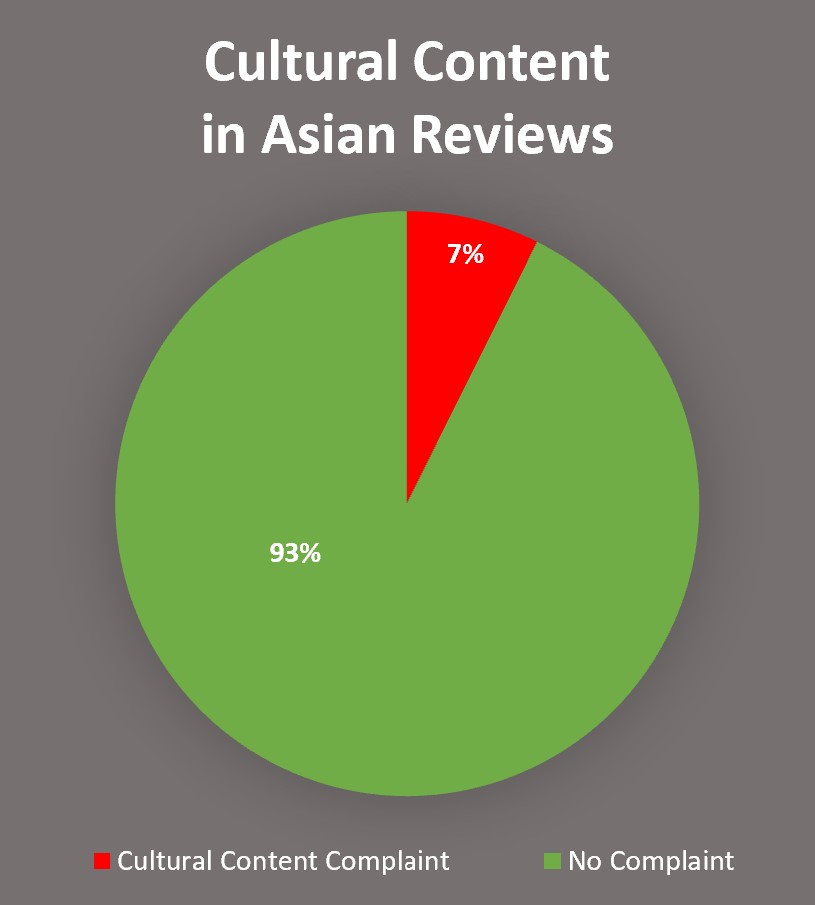
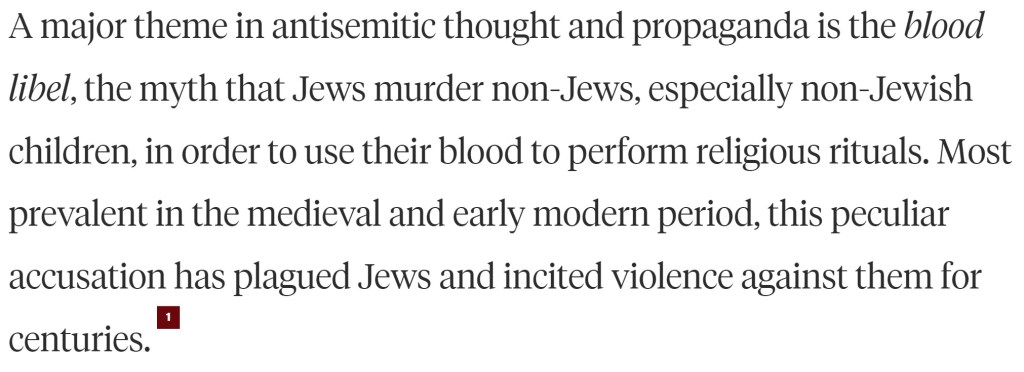
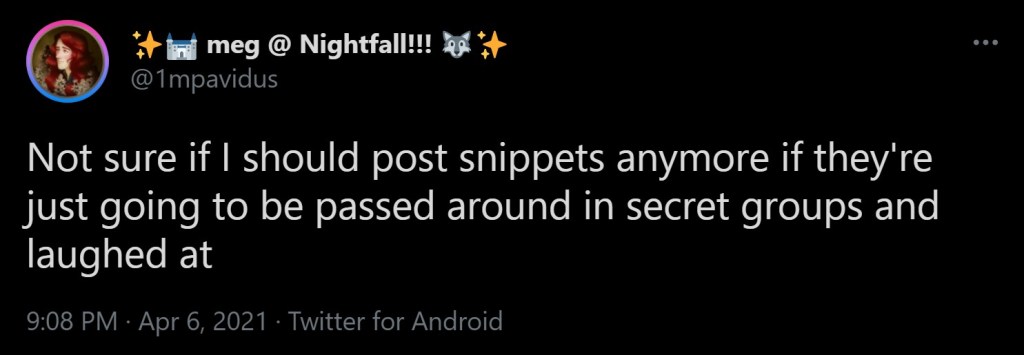
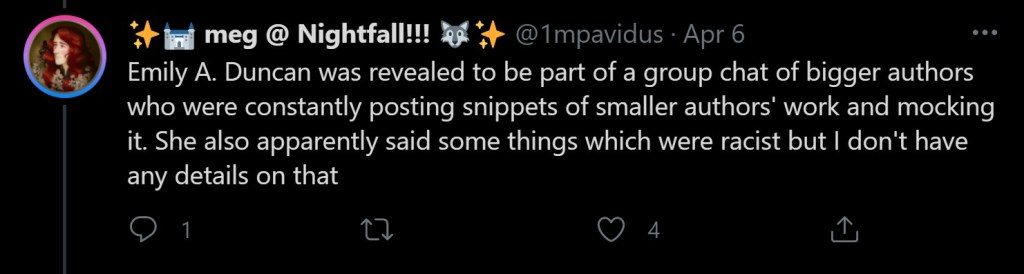
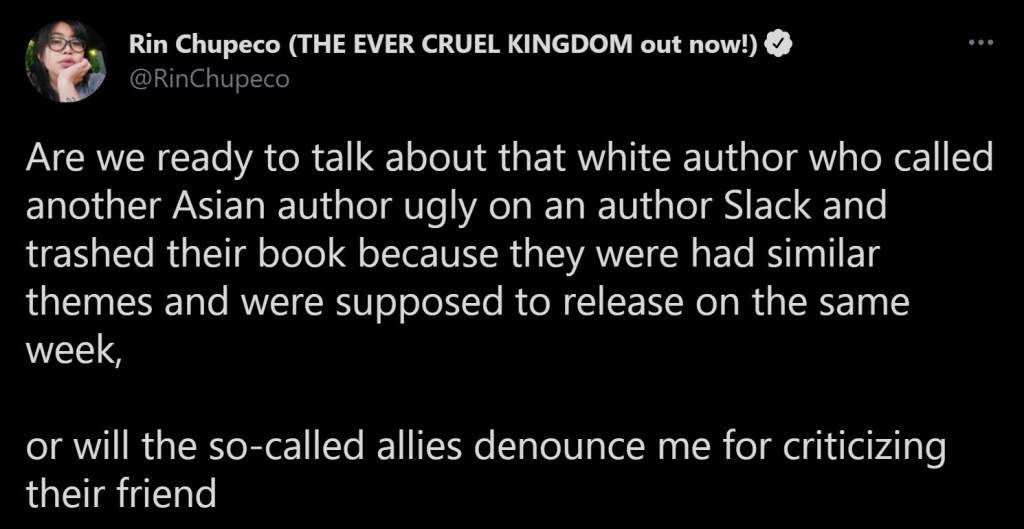
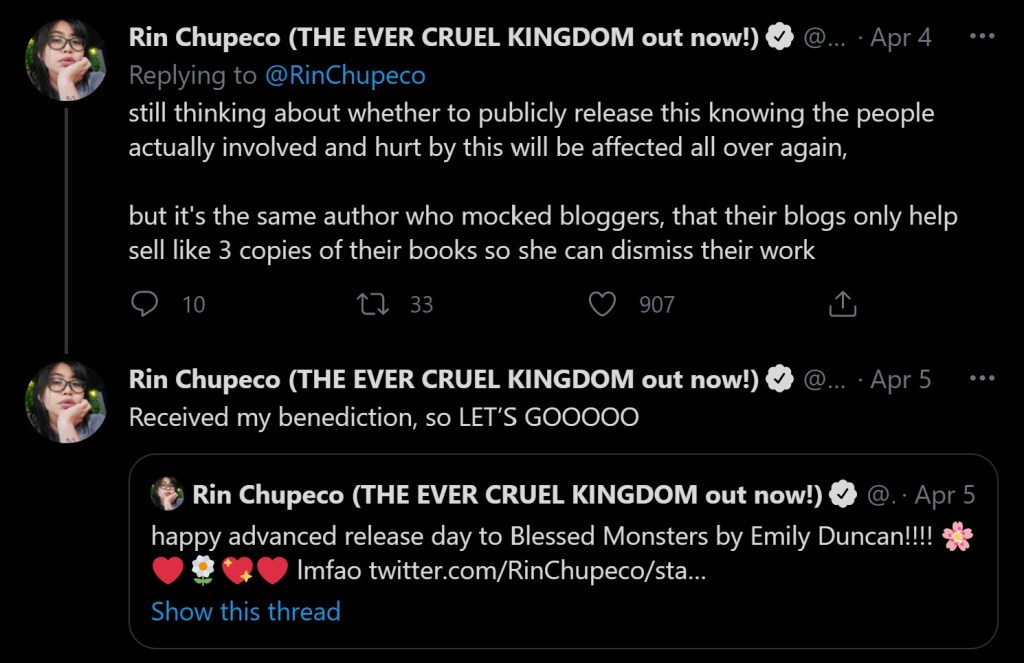
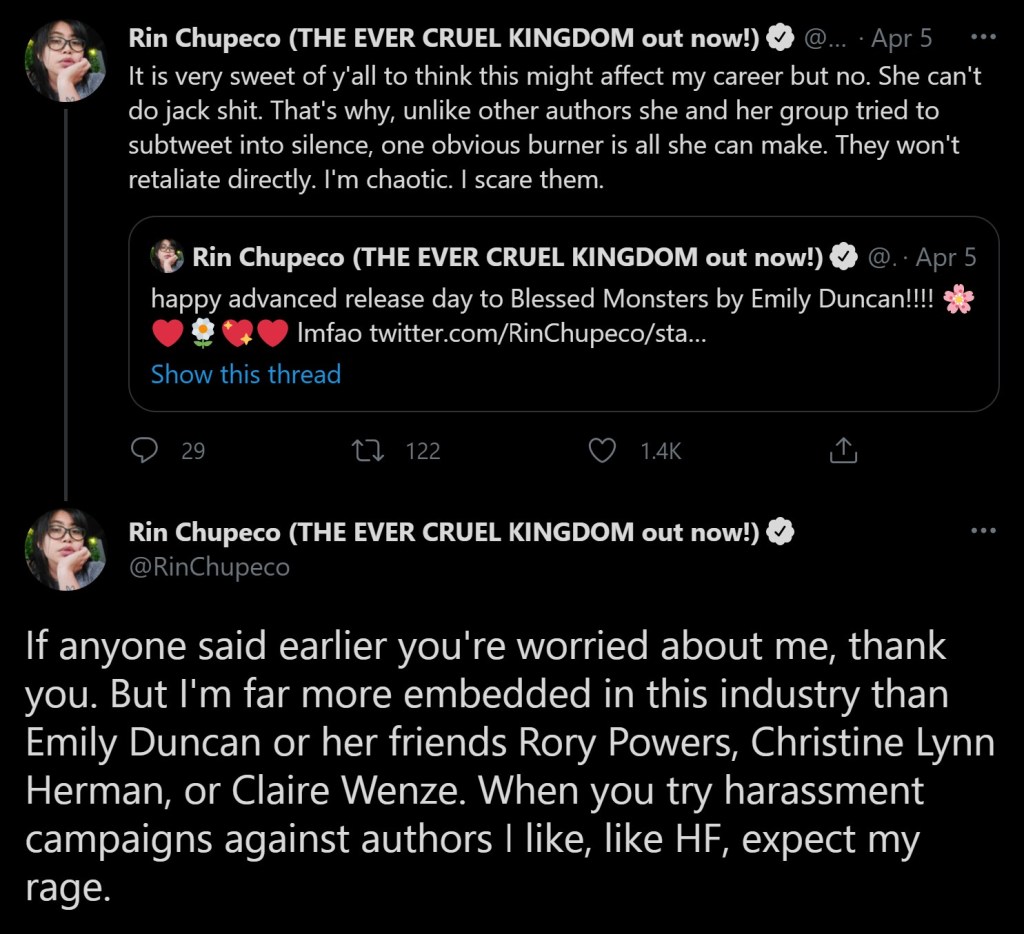
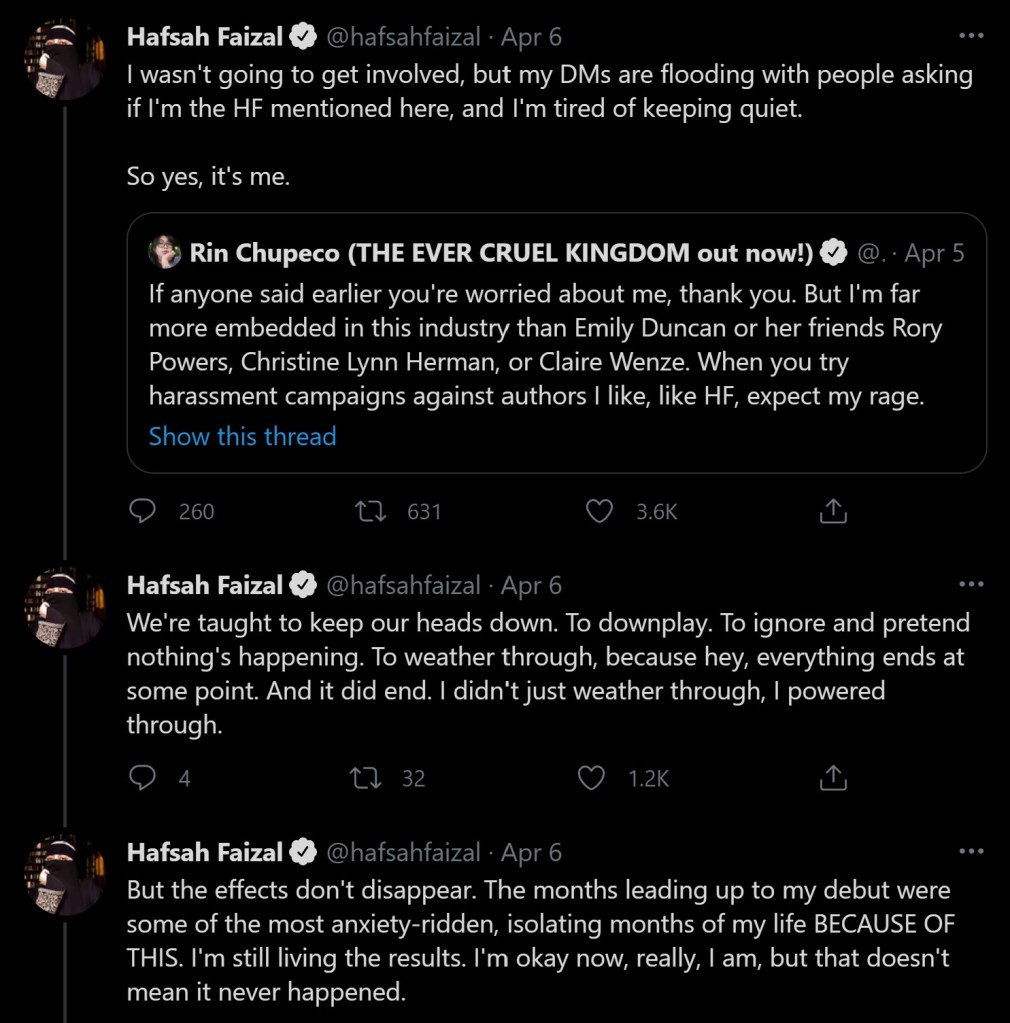
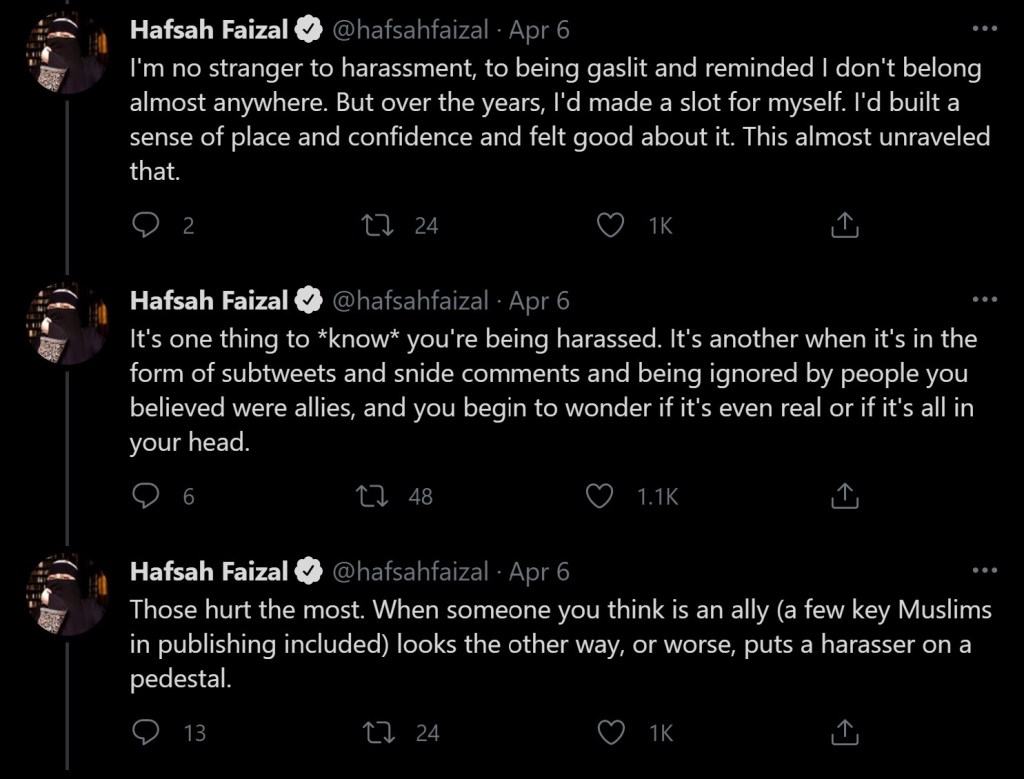
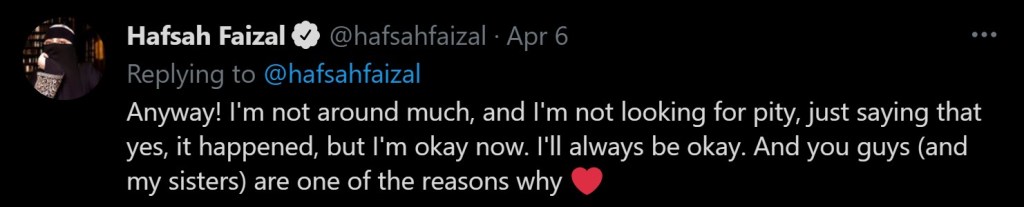
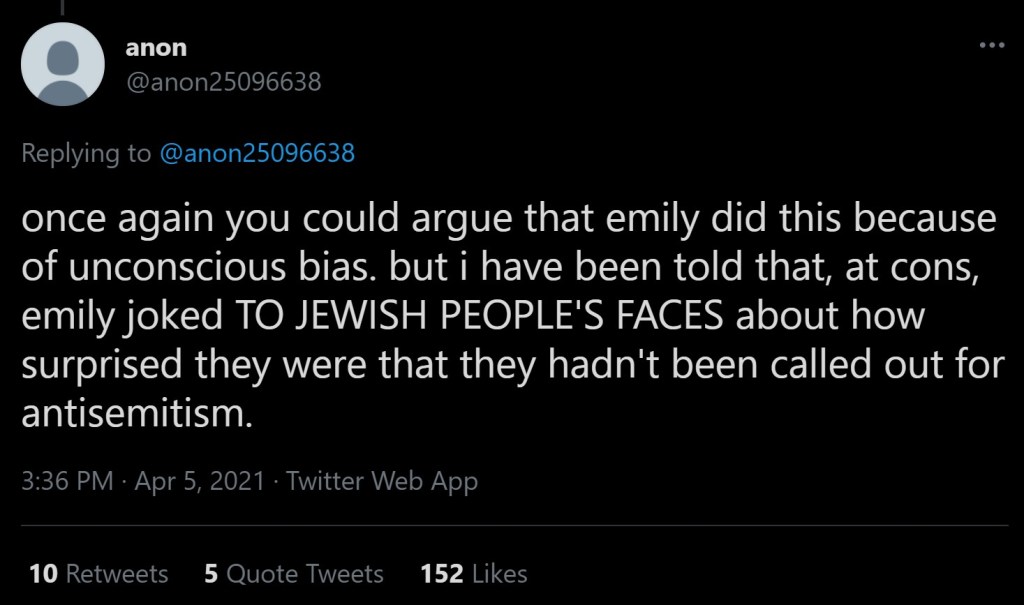
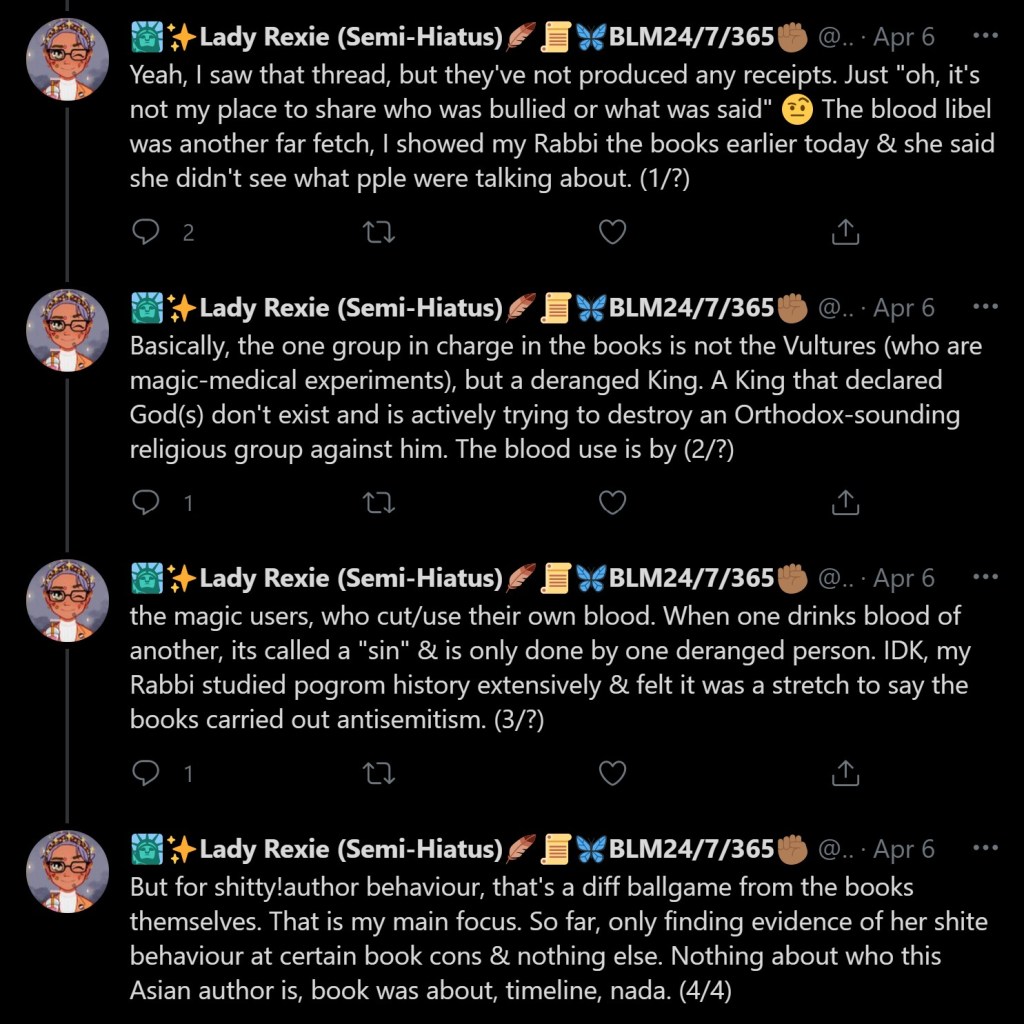
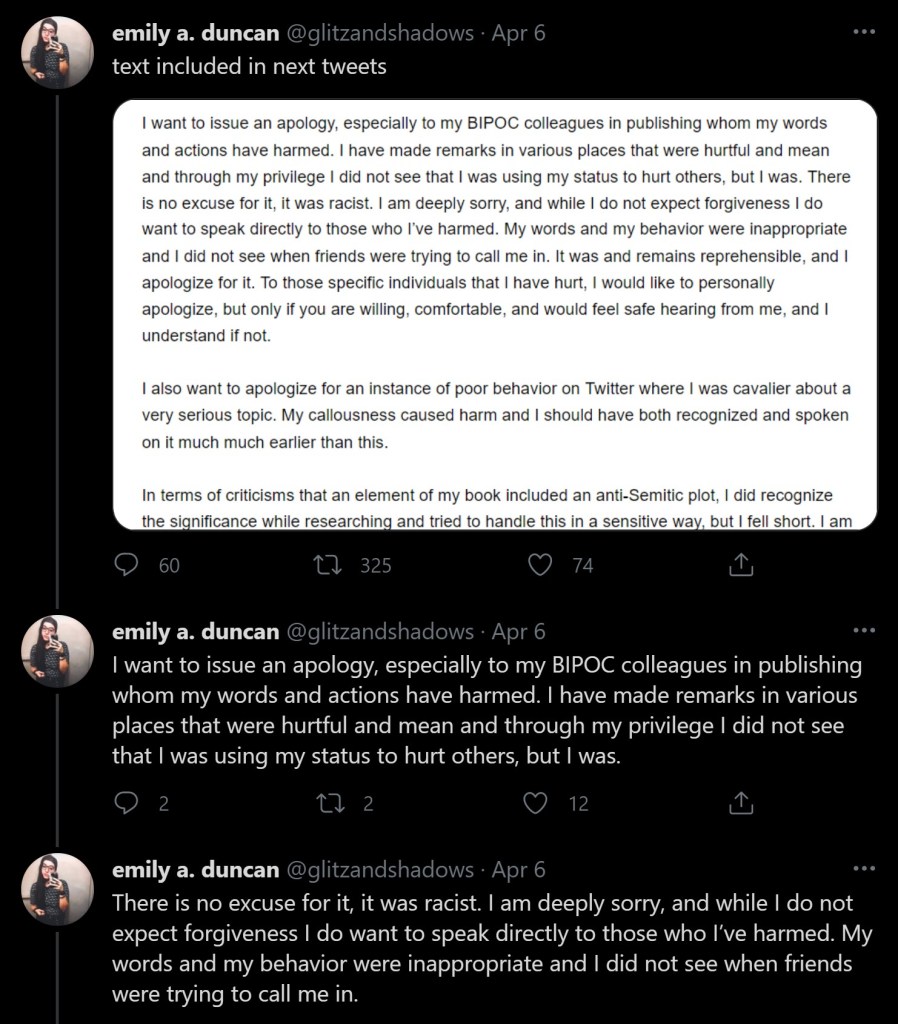
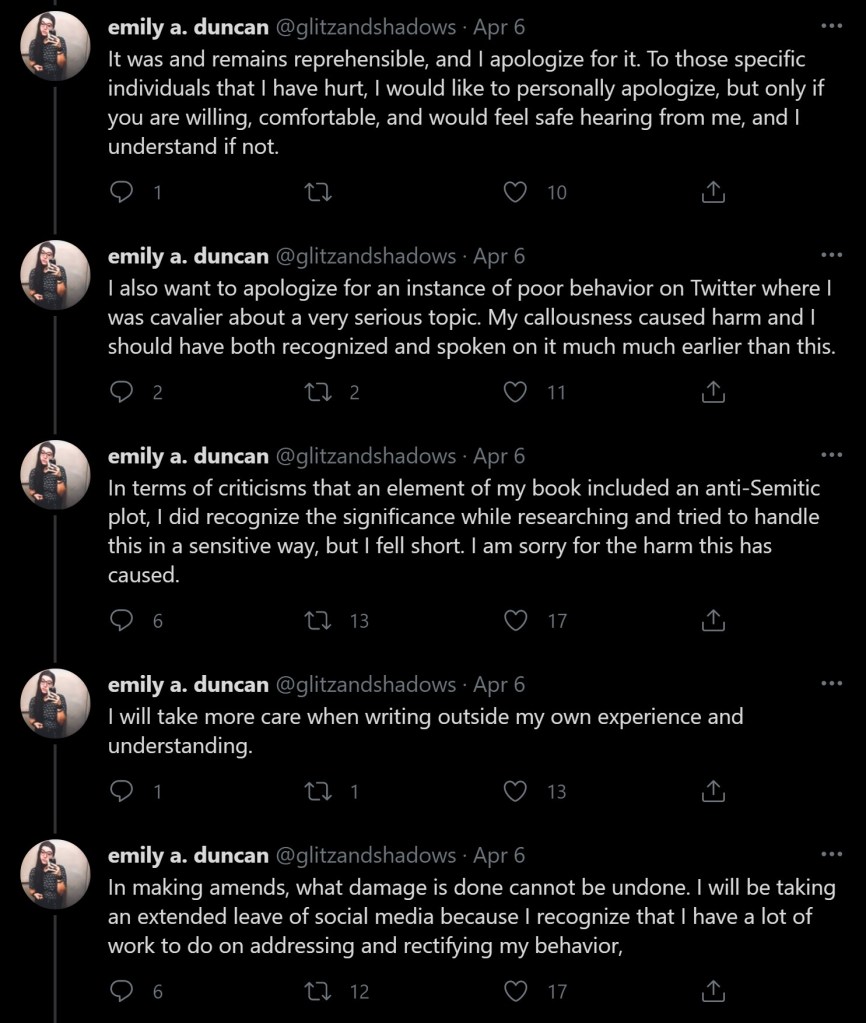



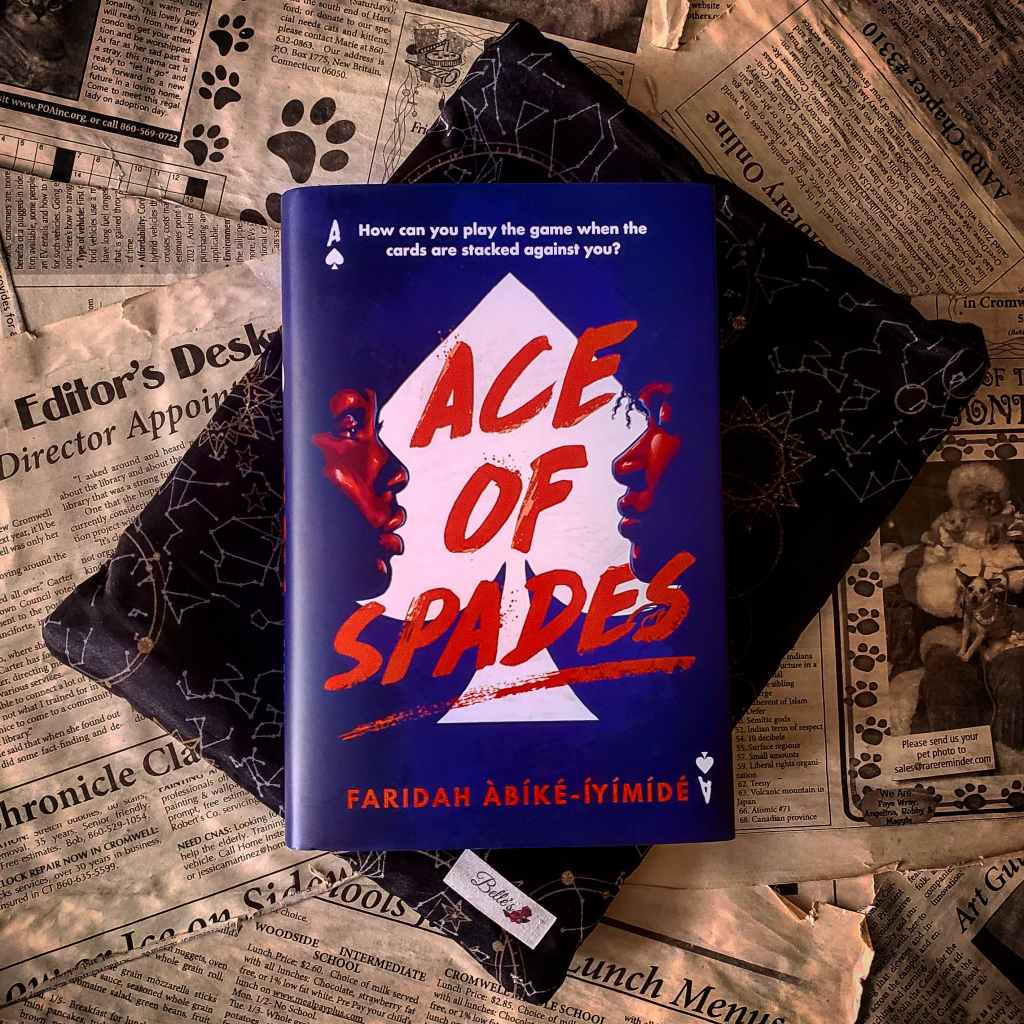


 The Fox Den