by Adrienne Young
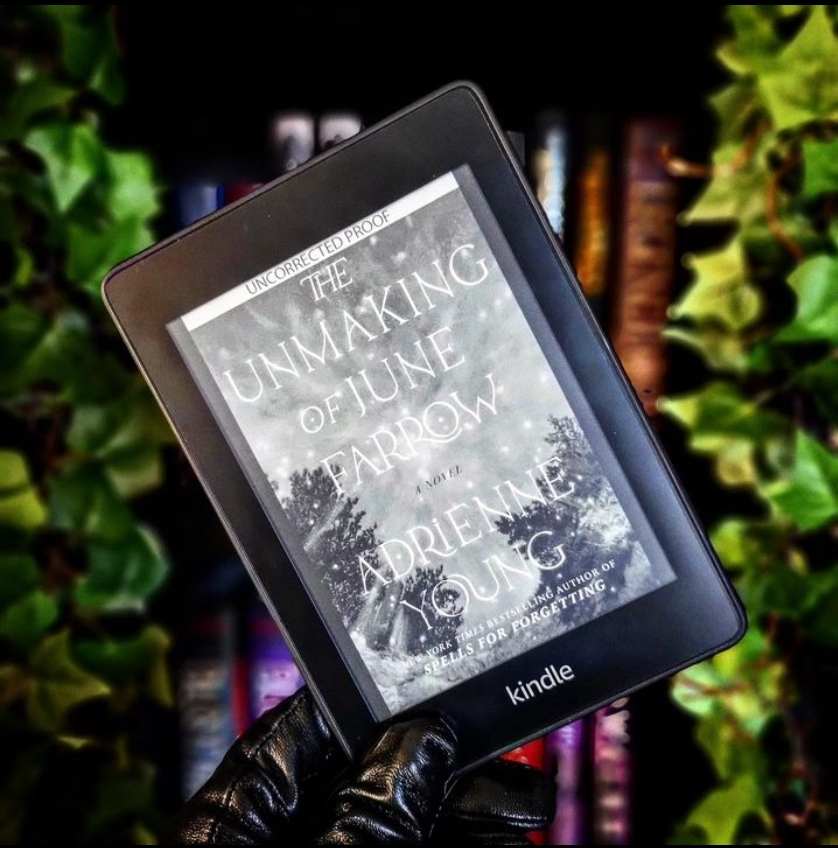
@SeaFox.Adventures
Congratulations to this now-New-York-Times-and-USA-Today-best-selling book!
I went into this book knowing only that it was Adrienne Young’s second adult novel and being pretty sure it was the book she did all that flower farm research for, and that was about it. If you want to know more, you can find the official summary on the Goodreads page here!
Recommendation: I’ve already been a little vocal about this with some, but I absolutely loved this book. I will be recommending it to basically everyone, and I’ll likely not stop anytime soon. This is, in my opinion, the best book Adrienne Young has written [so far]. It’s an interesting blend of mystery, including a murder mystery and missing person mystery, small-town drama, and romance while also keeping family as an important core element. That said, it’s a story where not every answer to every question is given, so if that’s something that would bother you, this book may not be perfect for you. I would still recommend it, but I would make sure that much is understood. In short, if you’re looking for a mystery with magical realism, this may be the book for you!
June Farrow is a wonderfully complex-yet-simple woman. She has lived with her grandmother slowly losing her mind, like all the Farrow women before her. Her grandmother describes it as feeling like you’re living in two different times, causing “episodes” where things that aren’t real seem to be for an amount of time. We get an early glimpse as to what “haunts” June in particular, but, for all the Farrow women, there’s also a red door. One of the times the door appears, June approaches it, realizes she can not only touch the door, but she can open, and the story begins in earnest. we watch June struggle to put all the pieces together to multiple mysteries, including what the June that married Eamon and had Annie did with her life with them, and it was an amazingly complex, interwoven set of mysteries that was captivating and kept me hooked, leaving me always trying to find a bit more time to read more of.
This next paragraph after this one touches on light spoilers. If you don’t want any spoilers at all, I would suggest stopping here! I did try my best not to spoil anything, some of the next paragraph could be argued to be spoiler-y, so feel free to stop here to prevent spoilers instead of at my usual spoiler line after this next paragraph. Just like I always mention there, feel free to come back after reading the book for the next paragraph and my spoiler thoughts after, or read the spoilers if that’s your jam.
“Magical realism” isn’t a term I was terribly familiar with before reading this book, though it’s something I’ve been subconsciously aware of for years of reading, and, in case it isn’t for you either, I wanted to take a moment to talk about it, and to try to see if I can explain my understanding of that term without spoilers for this book. [Disclaimer: I’m not an expert, nor am I “qualified” in any way other than having years and years and years of reading under my belt, so please keep that in mind! While this concept is something I’ve known about for years, this term isn’t, so I wanted to try to help anyone else out who is possible confused or unsure about what it means.] From what I’ve gathered, “magical realism” is sort of a “magic lite” kind of story. Where magic isn’t a major component of the story and/or world, but is still a fairly major contributor to the story. Without giving away too many spoilers, in this book, the major “magical realism” component is the red door, but, in keeping with the “magic lite” aspect, it’s essentially the only magic present, the rest of the world of the book being realistic or otherwise “normal” in regards to the real world. While that is over simplifying things [in the name of preventing spoilers], that’s essentially the “magical realism” of this story in a nutshell. While a chunk of this book is dedicated to the mystery of the curse and the red door they all see, there is still chunks of it dedicated to the romance and the murder mystery, which isn’t magical in-and-of itself. I hope this helps!
**AND HERE IS THE OFFICIAL SPOILER LINE, SO SPOILERS START IN EARNEST AFTER THIS! IF YOU WISH TO AVOID THEM, STOP READING HERE, AND COME BACK AFTER YOU FINISH READING THE BOOK YOURSELF! IF YOU DON’T MIND SPOILERS, FEEL FREE TO READ ON, AND I HOPE YOU ENJOY!**
While this book is by no means perfect, I really enjoyed this book, and I plan to read it again in the future! I’m really curious to see if multiple reads will actually make the tying up of the “current loose ends” clearer, or if it’ll just make the timelines easier to keep track of and follow.
Before I dive into the only “negative” [if you can call it that] thought, I wanted to take a moment to talk about the romance in the book. We’re lead, in the beginning, to think the romance for June was Mason. But, while there was a decent bit of foundation laid for that, I’m not sure if was enough for me to ultimately root for June to go back through time to be with him. Similar to how I felt in Outlander, once any kind of foundation was laid for Eamon, like there was for Jamie Frasier, the answer on whether she should go back was clear to me, and the answer was no. Do I think June could have had a happy and fulfilling life with Mason? Sure! But nothing in comparison to what she would [did?] have with Eamon.
The only real “snag” for me with the time-travel rules and the red door is that, technically, June has the option to cross four times, while the rest of the Farrow women only get the option three times. For June, she crosses back in time the first time [in the future, the only crossing we never see] which is when she meets Eamon and murders her father [in brutal self-defense]. For that version of June, she then crosses a second time which is when she, for lack of a better term, unmakes herself, hence the title of the book. Then, we have the June the story follows, which crosses for her first time to rejoin Eamon a year after her “unmaking”. That should make it her third crossing, which should stop her from seeing more doors, and be the last crossing she’s offered. But she goes on to see the door multiple times [once we actually see on page, and then more in the last-chapter-recap] after that before it stops appearing, which implies she’s allowed another crossing. My only guess is that her unmaking crossing didn’t count since she never crossed time, but I’m not sure how I feel about that. I understand, from the storytelling perspective, that the door appearing that first time for her once she’s learned everything and has to choose between her life with Eamon and Annie and her life with Mason is suppose to be her big moment and it’s supposed to be emotionally charged and everything else, and it wouldn’t be as much if she just thought that it would be an ideal time for the door to appear, but it does feel a smidge convenient with the hard rules that all the other Farrow women have had to live following.
Outside of that, without having reread the story, I’m not sure there’s much else I have to complain about. I guess the beginning of the curse would have been a nice thing to have explained, but I’m not sure if I just missed that explanation while focusing so much on other aspects of the story. It’s part of why I want a reread. While I would like an explanation for why the curse began, there are plenty of other great books who have unanswered “source” questions, so I don’t really know if I should count that against it, and I don’t really, for this read through.
I loved the twist that Birdie is June’s “past” daughter. I’m sure I’m in the minority on this one, as some people complain about the complexity of the time-traveling, but I loved the twist that somehow future June goes back in time and starts her relationship with Eamon, which results in Annie, and all the twists that comes with Annie’s existence as Birdie in June’s life. Time-travel needs rules, and, while this rules are simple and I haven’t sat down to make sure it’s leak-proof, the rules seem to hold water [even with the weird possible-contradiction with June having the opportunity to cross one more time than the other Farrow women got, if you consider the unmaking to not count as a crossing because time wasn’t truly crossed].
All-in-all, I loved this book, and I’m looking forward to reading it again some day! If you have any thoughts or wish to discuss anything with me about this book, please feel free to comment here or send me a message on bookstagram!
As always, I hope you enjoyed the review, and be kind, stay safe, and read on!
 The Fox Den